Prepare the Pan and Oven: Preheat your oven to 350°F / 175°C. Thoroughly grease a 12-cup Bundt pan with butter, ensuring you get into every nook and cranny.
Mix Dry : In a medium-sized bowl, whisk together the almond flour, coconut flour, granular erythritol, baking powder, and salt. This ensures the leavening agents are evenly distributed.
Mix Wet : In a separate large mixing bowl, use a hand mixer on low speed to blend the room temperature eggs, softened butter, softened coconut oil, and vanilla extract until smooth and creamy.
Combine and Fold: With the mixer still on low, gradually add the dry ingredient mixture to the wet , mixing just until combined.
Do not overmix. Gently fold in the 1 cup (240 ml) of unsweetened coconut flakes with a spatula.
Bake the Cake: Spoon the thick batter into your prepared Bundt pan and smooth the top.
Bake for 45 minutes, or until a wooden skewer inserted into the center of the cake comes out clean.
Cool and Prepare for Garnish: Place the pan on a wire rack to cool completely. This is a crucial step for a clean release.
Once the cake is cooling, lower the oven temperature to 325°F / 165°C.
Toast the Coconut: Spread the ½ cup of coconut flakes for the garnish in a thin, even layer on a parchment-lined baking sheet.
Bake for 5-10 minutes, stirring halfway through, until fragrant and golden brown. Watch it carefully as coconut burns in an instant!
Remove from the pan to cool.
Make the Glaze: In a small bowl, whisk the confectioners'-style erythritol, heavy cream, and vanilla extract until you have a smooth, pourable glaze.
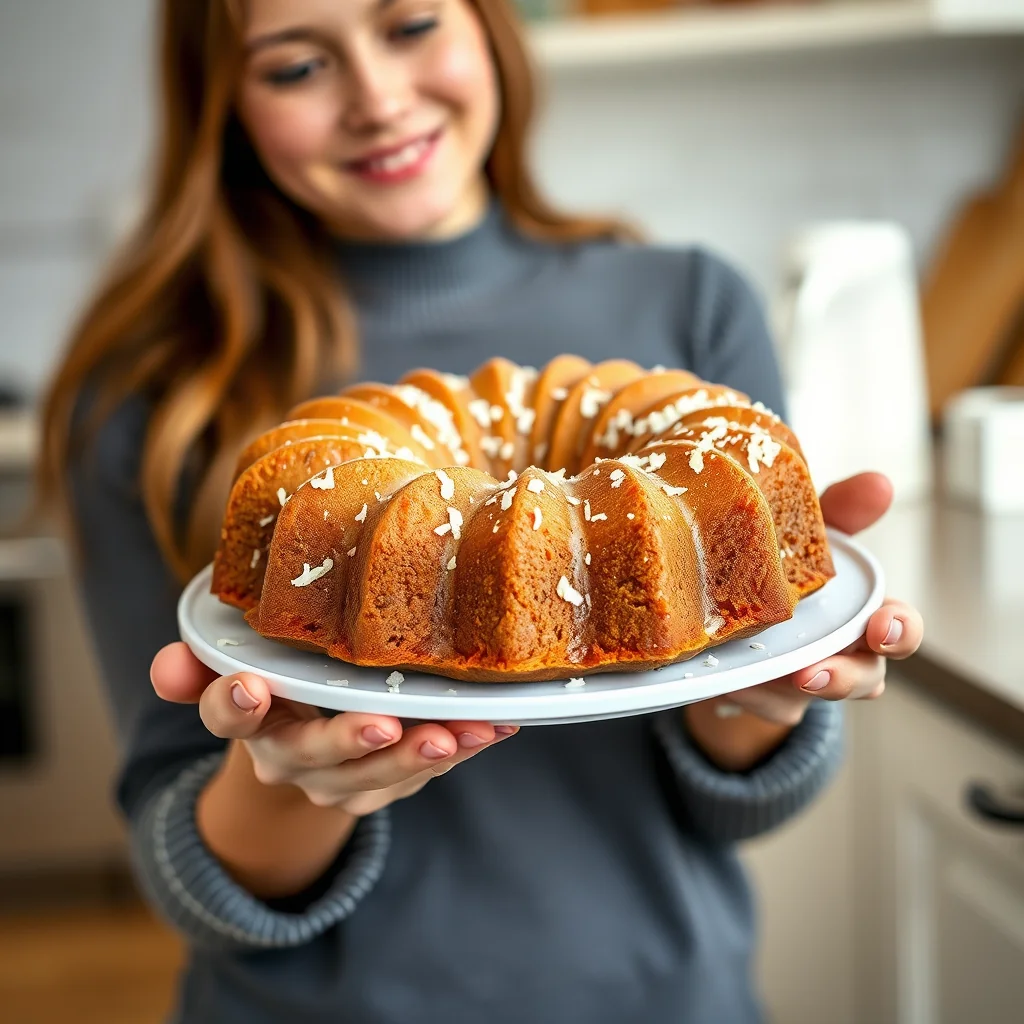
Assemble and Serve: Once the cake is completely cool, carefully run a thin knife around the edges of the pan to loosen it. Invert the cake onto a serving platter.
Drizzle the glaze evenly over the top, letting it drip down the sides. Immediately sprinkle with the toasted coconut garnish. The cake can be kept covered at room temperature for up to a day, or refrigerated in an airtight container for up to a week.
Grease your Bundt pan *exceptionally* well. Use softened butter or coconut oil and a pastry brush to get into every crevice to ensure a clean, beautiful release.
Don't skip toasting the coconut garnish. It deepens the flavor from sweet and mild to rich and nutty, adding a delightful textural contrast to the soft cake and smooth glaze.
Patience is key! Allow the cake to cool completely in the pan before attempting to invert it. A warm low-carb cake is a fragile cake and is much more likely to break.