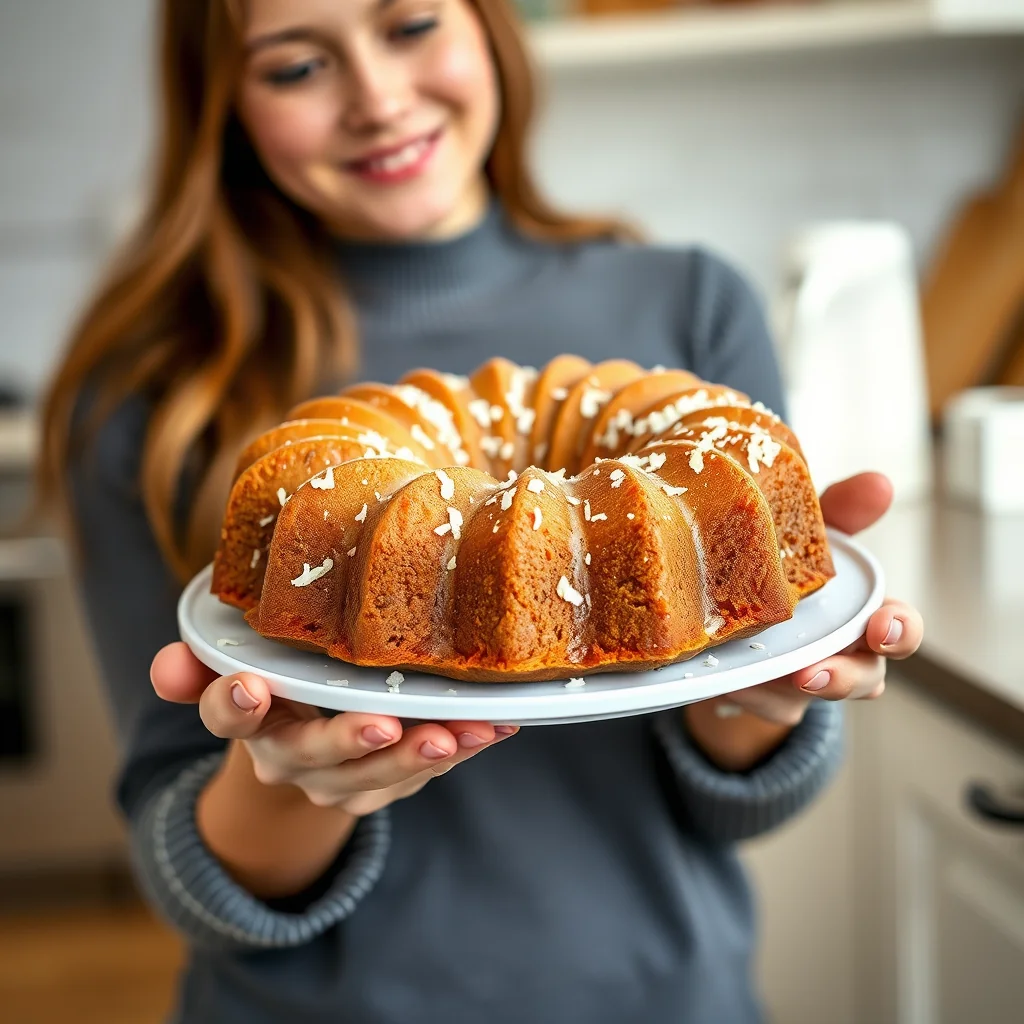
Decadent keto coconut bundt cake is a tender, coconut-packed cake with a pourable sugar-free glaze and a tumble of toasted coconut on top. Almond and coconut flours keep every slice soft, moist, and low-carb. It looks like a bakery centrepiece and slices like a dream.
Does anyone else have a beautiful Bundt pan that sits on a shelf, gathering more dust than compliments? Since embracing a keto lifestyle, my collection has been sadly neglected. I decided it was time to change that, and this decadent, triple-coconut masterpiece was born! This cake is a true celebration of coconut, using coconut oil and flour in the tender crumb and a shower of gloriously toasted coconut flakes on top—a nod to my favorite Southern desserts. It’s rich, unbelievably moist, and proves that you don’t have to give up elegant desserts to stay on track. Let’s get that pan off the shelf and put it to delicious use!
Ingredients
• For the Keto Coconut Cake
• 2 cups / 224g (7.9 oz) finely ground blanched almond flour
• ¼ cup / 30g (1.06 oz) coconut flour
• ¾ cup / 150g (5.3 oz) granular erythritol
• 2 teaspoons baking powder
• ½ teaspoon salt
• 5 large eggs, room temperature
• ½ cup / 113g (4 oz) salted butter, softened
• ¼ cup / 56g (1.98 oz) coconut oil, softened
• 2 teaspoons vanilla extract
• 1 cup / 80g (2.82 oz) unsweetened coconut flakes
• For the Sugar-Free Glaze
• ½ cup / 80g (2.82 oz) confectioners’-style erythritol
• ¼ cup / 60ml (2 fl oz) heavy whipping cream
• ¼ teaspoon vanilla extract
• For the Toasted Coconut Garnish
• ½ cup / 40g (1.41 oz) unsweetened coconut flakes
Instructions
1. Prepare the Pan and Oven: Preheat your oven to 350°F / 175°C. Thoroughly grease a 12-cup Bundt pan with butter, ensuring you get into every nook and cranny.
2. Mix Dry : In a medium-sized bowl, whisk together the almond flour, coconut flour, granular erythritol, baking powder, and salt. This ensures the leavening agents are evenly distributed.
3. Mix Wet : In a separate large mixing bowl, use a hand mixer on low speed to blend the room temperature eggs, softened butter, softened coconut oil, and vanilla extract until smooth and creamy.
4. Combine and Fold: With the mixer still on low, gradually add the dry ingredient mixture to the wet , mixing just until combined. Do not overmix. Gently fold in the 1 cup (240 ml) of unsweetened coconut flakes with a spatula.
5. Bake the Cake: Spoon the thick batter into your prepared Bundt pan and smooth the top. Bake for 45 minutes, or until a wooden skewer inserted into the center of the cake comes out clean.
6. Cool and Prepare for Garnish: Place the pan on a wire rack to cool completely. This is a crucial step for a clean release. Once the cake is cooling, lower the oven temperature to 325°F / 165°C.
7. Toast the Coconut: Spread the ½ cup of coconut flakes for the garnish in a thin, even layer on a parchment-lined baking sheet. Bake for 5-10 minutes, stirring halfway through, until fragrant and golden brown. Watch it carefully as coconut burns in an instant! Remove from the pan to cool.
8. Make the Glaze: In a small bowl, whisk the confectioners’-style erythritol, heavy cream, and vanilla extract until you have a smooth, pourable glaze.
9. Assemble and Serve: Once the cake is completely cool, carefully run a thin knife around the edges of the pan to loosen it. Invert the cake onto a serving platter. Drizzle the glaze evenly over the top, letting it drip down the sides. Immediately sprinkle with the toasted coconut garnish. The cake can be kept covered at room temperature for up to a day, or refrigerated in an airtight container for up to a week.
Nutritional Information
• Yield: 10 servings
• Serving Size: 1 slice
• Amount Per Serving
• Calories: 415
• Fat: 38g
• Protein: 9g
• Total Carbohydrates: 9g (0.32 oz)
• Dietary Fiber: 5g
• Net Carbohydrates: 4g (0.14 oz)
• Disclaimer: is an estimate and may vary based on the exact and brands used.
Pro Tips
• for a Perfect Bundt
• For a smooth, uniform batter, ensure your eggs, butter, and coconut oil are all at room temperature before you begin mixing.
• Grease your Bundt pan *exceptionally* well. Use softened butter or coconut oil and a pastry brush to get into every crevice to ensure a clean, beautiful release.
• Don’t skip toasting the coconut garnish. It deepens the flavor from sweet and mild to rich and nutty, adding a delightful textural contrast to the soft cake and smooth glaze.
• Patience is key! Allow the cake to cool completely in the pan before attempting to invert it. A warm low-carb cake is a fragile cake and is much more likely to break.
FAQ
Q: Is this Keto Coconut Bundt Cake gluten-free
A: Yes, this cake is naturally gluten-free because it is made with almond flour and coconut flour instead of traditional wheat flour. Ensure your baking powder is also certified gluten-free if you have a high sensitivity.
Q: Why did my low-carb cake stick to the Bundt pan
A: Sticking is often caused by two things: improper greasing or not cooling the cake completely. It’s crucial to grease every crevice of the pan thoroughly with butter or coconut oil. Also, you must let the cake cool completely in the pan before inverting it, as warm low-carb cakes are very fragile.
Q: Can I use a different sweetener instead of erythritol
A: While this recipe was developed with erythritol, you can often substitute it with another granular keto-friendly sweetener like allulose or a monk fruit blend. Be sure to check the conversion rates, as sweetness levels can vary between brands and types.
Q: How should I store this coconut cake
A: The cake can be kept covered at room temperature for up to one day. For longer storage, place it in an airtight container and refrigerate for up to a week.
Pro Tips
- Bring the eggs, butter, and coconut oil to room temperature first — that's what gives you a smooth, uniform batter without lumps of fat.
- Grease the Bundt pan exceptionally well, working softened butter or coconut oil into every crevice with a pastry brush so the cake releases cleanly.
- Don't overmix once the dry ingredients go in; fold the coconut flakes in gently with a spatula, and let the cake cool completely in the pan before inverting — a warm low-carb cake is fragile.
- Don't skip toasting the coconut garnish: bake the flakes at 325°F / 165°C for 5–10 minutes, stirring halfway, until golden — watch closely, coconut burns in an instant.
- Whisk the glaze from confectioners'-style erythritol, heavy cream, and vanilla until pourable, drizzle it over the cooled cake, and add the toasted coconut right away. Keeps a day at room temperature or a week refrigerated.
Frequently Asked Questions
Is coconut bundt cake keto?
This one is — each of the 10 slices has 9 g of total carbs with 5 g of fiber, so 4 g net, thanks to almond flour, coconut flour, and erythritol.
Why did my bundt cake stick to the pan?
Usually under-greasing or unmolding while warm. Butter every crevice of the pan thoroughly and let the cake cool completely before running a knife around the edge and inverting.
Can I make the cake ahead of time?
Yes — it keeps covered at room temperature for up to a day, or in an airtight container in the refrigerator for up to a week. Glaze it close to serving.
What makes the cake so moist?
The combination of softened butter, coconut oil, and coconut flakes folded into the almond and coconut flour batter — plus a gentle mix that keeps the crumb tender.
Recipe card below.
More Recipes You’ll Love
Decadent Keto Coconut Bundt Cake
Ingredients
Method
- Prepare the Pan and Oven: Preheat your oven to 350°F / 175°C. Thoroughly grease a 12-cup Bundt pan with butter, ensuring you get into every nook and cranny.
- Mix Dry : In a medium-sized bowl, whisk together the almond flour, coconut flour, granular erythritol, baking powder, and salt. This ensures the leavening agents are evenly distributed.
- Mix Wet : In a separate large mixing bowl, use a hand mixer on low speed to blend the room temperature eggs, softened butter, softened coconut oil, and vanilla extract until smooth and creamy.
- Combine and Fold: With the mixer still on low, gradually add the dry ingredient mixture to the wet , mixing just until combined.
- Do not overmix. Gently fold in the 1 cup (240 ml) of unsweetened coconut flakes with a spatula.
- Bake the Cake: Spoon the thick batter into your prepared Bundt pan and smooth the top.
- Bake for 45 minutes, or until a wooden skewer inserted into the center of the cake comes out clean.
- Cool and Prepare for Garnish: Place the pan on a wire rack to cool completely. This is a crucial step for a clean release.
- Once the cake is cooling, lower the oven temperature to 325°F / 165°C.
- Toast the Coconut: Spread the ½ cup of coconut flakes for the garnish in a thin, even layer on a parchment-lined baking sheet.
- Bake for 5-10 minutes, stirring halfway through, until fragrant and golden brown. Watch it carefully as coconut burns in an instant!
- Remove from the pan to cool.
- Make the Glaze: In a small bowl, whisk the confectioners'-style erythritol, heavy cream, and vanilla extract until you have a smooth, pourable glaze.
- Assemble and Serve: Once the cake is completely cool, carefully run a thin knife around the edges of the pan to loosen it. Invert the cake onto a serving platter.
- Drizzle the glaze evenly over the top, letting it drip down the sides. Immediately sprinkle with the toasted coconut garnish. The cake can be kept covered at room temperature for up to a day, or refrigerated in an airtight container for up to a week.
- Grease your Bundt pan *exceptionally* well. Use softened butter or coconut oil and a pastry brush to get into every crevice to ensure a clean, beautiful release.
- Don't skip toasting the coconut garnish. It deepens the flavor from sweet and mild to rich and nutty, adding a delightful textural contrast to the soft cake and smooth glaze.
- Patience is key! Allow the cake to cool completely in the pan before attempting to invert it. A warm low-carb cake is a fragile cake and is much more likely to break.