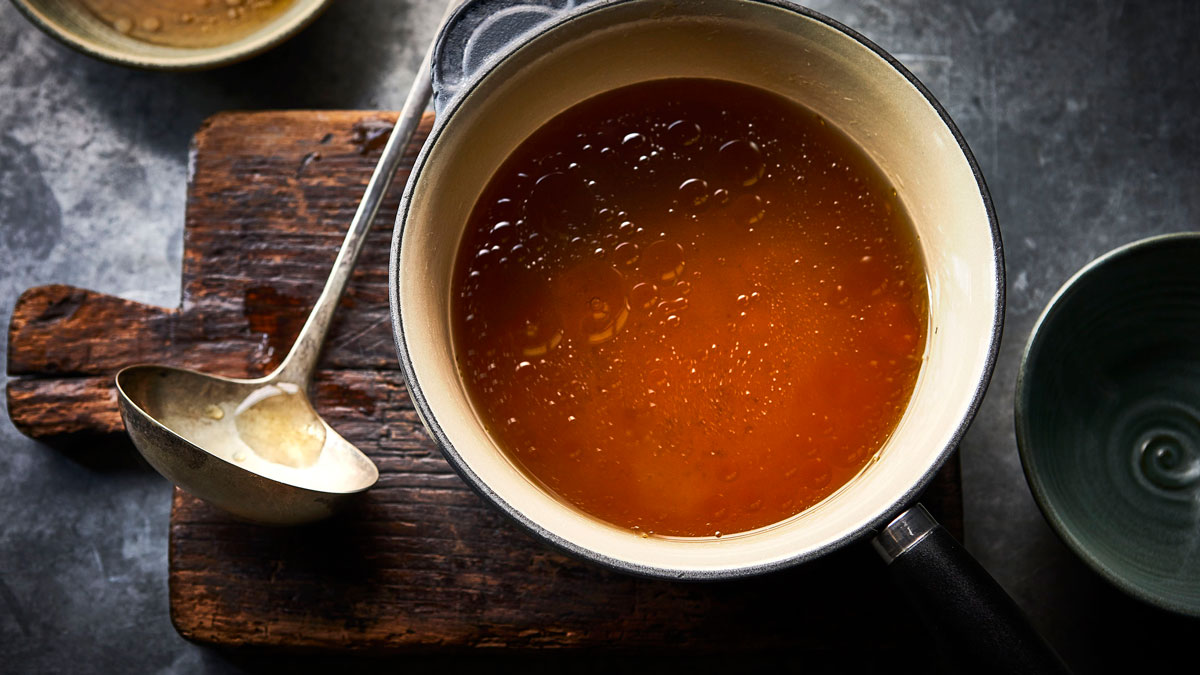
There’s something truly magical about a pot of bone broth simmering on the stove for days, filling your home with an aroma that’s both deeply savory and incredibly comforting. This isn’t just any broth; it’s a liquid gold, a healing elixir packed with collagen and minerals. This recipe is designed for a very large batch because if you’re going to invest the time, you might as well stock your freezer with wellness. One sip of this rich, tomato-infused broth, and you’ll understand why it’s a cornerstone of a nourishing kitchen.
Ingredients
• 2 oz / 57 g roasted garlic
• 10 oz / 283 g roasted organic red onions
• 1 oz / 28 g coconut oil
• 4.5 gallons / 17 liters filtered water
• 22 oz / 624 g tomato paste (from a glass jar)
• 2 lbs / 907 g organic chicken backbones
• 16 oz / 454 g organic tomato pulp
• 6 oz / 170 g Celtic sea salt
• 1 oz / 28 g fresh ground black pepper
• OPTIONAL ADD-INS
• 2 to 4 oz / 57 to 113 g fresh rosemary
• 4 oz / 113 g organic cilantro with stems
• 4 oz / 113 g organic oregano
Instructions
1. DIRECTIONS
2. In a very large stockpot (at least 6 gallons), heat the coconut oil over medium heat. Add the roasted onions and garlic, sautéing for 15 to 20 minutes until deeply fragrant and caramelized.
3. Add the chicken backbones, tomato paste, tomato pulp, salt, pepper, water, and any optional herbs to the pot. Stir well to combine.
4. Bring the mixture to a gentle boil, then immediately reduce the heat to the lowest possible setting. Let the broth simmer, uncovered or partially covered, for 2 to 3 days. The longer it simmers, the more concentrated and nutrient-rich it will become.
5. Carefully strain the broth through a fine-mesh sieve or cheesecloth into another large pot or heat-safe containers. Discard the solids.
6. Allow the broth to cool completely. Skim any fat that solidifies on the surface, if desired. Portion the finished broth (approximately 5 gallons) into freezer-safe containers or bags for long-term storage.
Nutritional Information
• NUTRITIONAL INFO
• Bone broth is a rich source of collagen, gelatin, and amino acids, which support joint, skin, and gut health.
• The long simmering process extracts vital minerals from the bones, including calcium, magnesium, and phosphorus.
• Optional herbs like cilantro and oregano add a boost of vitamins and minerals, including potassium, iron, and vitamins A, K, and C.
• Rosemary may enhance the extraction of calcium from the bones during the cooking process.
Pro Tips
• For easy, single-serving portions, freeze the cooled broth in ice cube trays or silicone muffin tins. Once frozen solid, transfer the pucks to a freezer bag.
• A sign of a high-quality, collagen-rich broth is that it will gel and become firm like Jell-O when fully chilled in the refrigerator.
• Don’t let the broth come to a rolling boil during the long simmer. A very gentle, ‘lazy’ bubble is all you need to prevent it from becoming cloudy.
• Ask your local butcher for chicken backs, necks, and feet. These parts are inexpensive and packed with the cartilage and connective tissue needed for a gelatinous broth.
FAQ
Q: Why does this bone broth recipe simmer for 2 to 3 days
A: The long, slow simmer is crucial for breaking down the chicken bones and connective tissue to extract the maximum amount of collagen, gelatin, and minerals. This extended time creates a deeply flavorful and nutrient-dense broth.
Q: My bone broth didn’t gel in the fridge what did I do wrong
A: A broth that doesn’t gel usually means the ratio of water to collagen-rich bones was too high. Ensure you use parts like chicken backs, necks, or feet. Also, avoid a rolling boil, as a very gentle simmer is key to preserving the gelatin.
Q: Can I make this recipe in a smaller pot
A: Yes, you can easily halve or quarter all the ingredients to fit a smaller stockpot. Just maintain the same ratios of bones, vegetables, and water to achieve a similar flavor and consistency.
Q: What is the best way to store this large batch of bone broth
A: For long-term storage, this broth freezes beautifully for up to 6 months. A pro tip is to freeze it in ice cube trays or silicone muffin tins for easy, single-serving portions that you can add to any meal.