Tired of overcooked, underwhelming steaks? The secret to a perfectly juicy, edge-to-edge medium-rare rib-eye isn’t a grill—it’s your oven. The reverse sear method is a game-changer, gently cooking the steak before finishing it with a blistering-hot sear in a cast-iron skillet. The result? Incredibly tender meat with a magnificent crust. And when you spoon that sizzling, herbed brown butter over the top, you’ll wonder why you ever cooked steak any other way. It’s a little extra time for a truly decadent, restaurant-worthy result.
Ingredients
• 2 bone-in rib-eye steaks, about 6 oz / 170 g each and 1½ inches / 3.8 cm thick
• Kosher salt and freshly ground black pepper, to taste
• 2 tablespoons / 28 g salted butter
• 2 fresh rosemary sprigs
• 2 cloves garlic, minced
Instructions
1. Remove the steaks from the refrigerator. Pat them dry with paper towels and season generously on all sides with salt and pepper. Let them sit at room temperature for 30 minutes.
2. Preheat your oven to 275°F / 135°C. Place a wire rack inside a foil-lined baking sheet.
3. Arrange the steaks on the wire rack and bake for 20-25 minutes, or until an instant-read thermometer inserted into the thickest part registers 125°F / 52°C for medium-rare. Remove from the oven and let the steaks rest on the rack for 15 minutes.
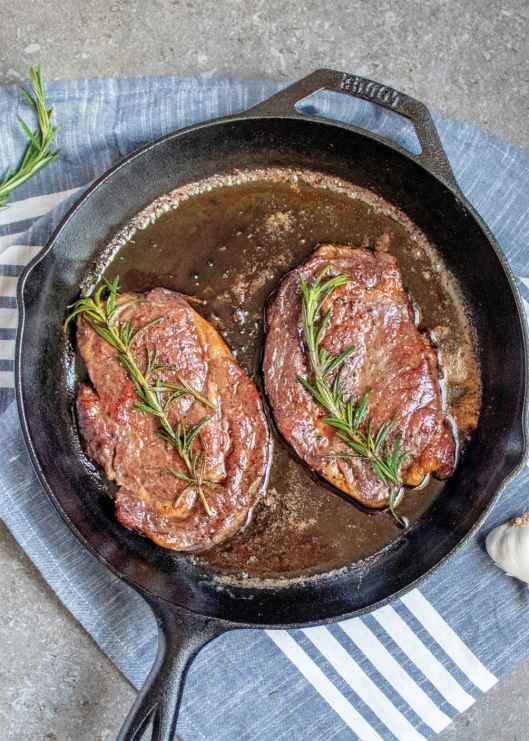
4. Heat a cast-iron skillet over medium-high heat until it’s very hot. Add the butter; it will melt and foam. Carefully place the steaks in the skillet and sear for 60-90 seconds per side to develop a deep brown crust.
5. During the last 30 seconds of searing, add the rosemary sprigs and minced garlic to the pan. Tilt the skillet and use a large spoon to baste the steaks continuously with the fragrant, browned butter. Serve immediately.
Nutritional Information
• Yield: 2 servings, Serving Size: 1 steak. Amount Per Serving: Calories: 550, Total Fat: 45g, Saturated Fat: 20g, Cholesterol: 150mg, Sodium: 700mg, Carbohydrates: 1g, Protein: 35g. (Note: This is an estimate and may vary based on exact and preparation).
Pro Tips
• An instant-read meat thermometer is non-negotiable for the reverse sear method. It’s the only way to guarantee your steak is cooked to the perfect internal temperature before searing.
• For the best possible crust, pat the steaks completely dry with paper towels before seasoning. Moisture is the enemy of a good sear.
• A cast-iron skillet is ideal for searing as it retains heat exceptionally well, creating a deep, even crust that other pans can’t match.
• The 15-minute rest after the oven is crucial. It allows the muscle fibers to relax and reabsorb juices, ensuring a tender, flavorful steak that doesn’t bleed out when sliced.
FAQ
Q: Why is a meat thermometer so important for reverse searing
A: A meat thermometer is crucial for the reverse sear method because it’s the only way to accurately know when the steak has reached the perfect internal temperature (125°F / 52°C for medium-rare) in the oven before the final sear. This guarantees a perfectly cooked, edge-to-edge result.
Q: Can I use a different cut of steak for this recipe
A: Yes, the reverse sear method works well for other thick-cut steaks, at least 1.5 inches thick, like a New York strip, porterhouse, or filet mignon. You will need to adjust the oven time based on the steak’s thickness and desired doneness.
Q: What if I don’t have a cast-iron skillet
A: While a cast-iron skillet is ideal for its superior heat retention, you can use the heaviest-bottomed pan you have, such as a thick stainless steel or carbon steel skillet. The goal is to get the pan as hot as possible to achieve a quick, deep crust.
Q: Do I really need to rest the steak for 15 minutes after the oven
A: Absolutely. Resting the steak after it comes out of the oven is a critical step. It allows the muscle fibers to relax and reabsorb the juices, which ensures your final steak is incredibly tender and flavorful instead of having all the juices run out when you slice it.