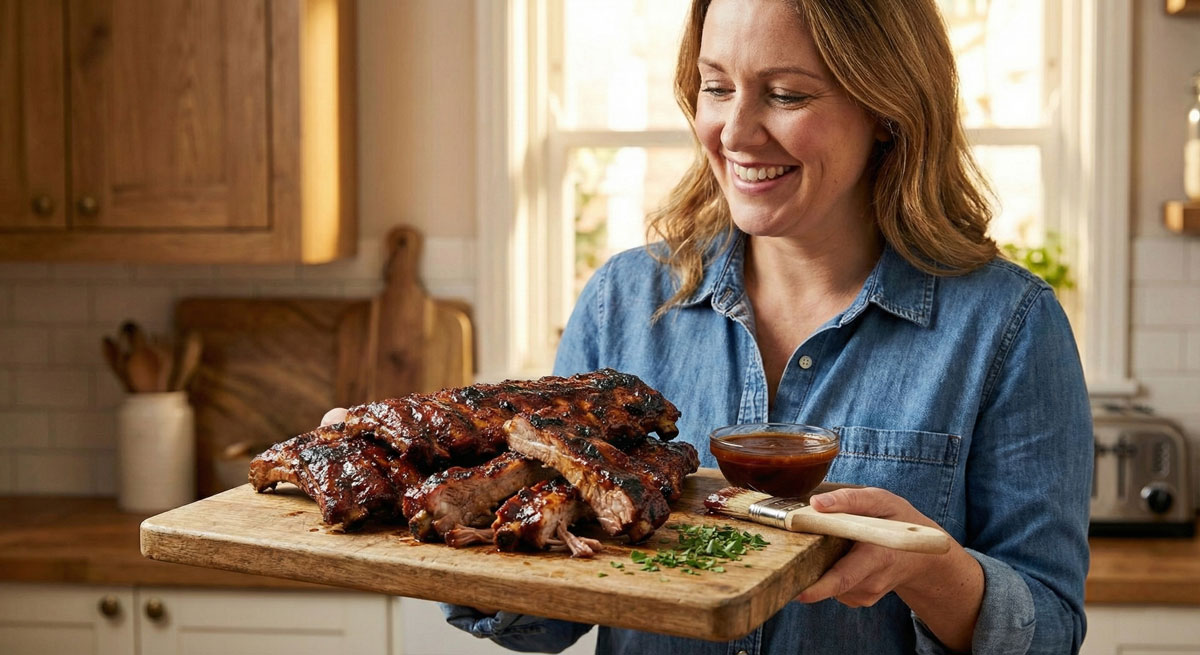
Craving classic, fall-off-the-bone BBQ ribs but sticking to a low-carb lifestyle? You’ve come to the right place! This recipe delivers everything you love about tender, juicy, oven-baked ribs without any of the sugar. We start with a simple yet flavorful homemade dry rub, bake them low and slow until they’re perfectly tender, and finish them under the broiler with your favorite sugar-free BBQ sauce for that irresistible caramelized glaze. Get ready to get your hands dirty—this is a meal you won’t soon forget!
Ingredients
• ¼ cup (48 g) Erythritol
• 1 tbsp garlic powder
• 1 tbsp paprika
• ½ tsp red chili powder
• 4 lb (1.8 kg) pork ribs, membrane removed
• Salt and freshly ground black pepper, to taste
• 1 ½ tsp liquid smoke
• 1 ½ cups (340 g) sugar-free BBQ sauce
Instructions
1. Prep the Oven and Pan: Preheat your oven to 300°F (150°C). Line a large, rimmed baking sheet with two layers of heavy-duty aluminum foil, shiny side out.
2. Mix the Dry Rub: In a small bowl, whisk together the Erythritol, garlic powder, paprika, and red chili powder until thoroughly combined.
3. Season the Ribs: Pat the pork ribs completely dry with paper towels. Season generously on all sides with salt and pepper, then rub the liquid smoke evenly over the meat.
4. Apply the Rub: Sprinkle the Erythritol mixture all over the ribs, using your hands to press the rub firmly into the meat on all sides.
5. Wrap for Baking: Arrange the ribs on the prepared baking sheet, meaty side down. Cover with two more layers of foil, then tightly roll and crimp the edges of the top and bottom foil layers to create a completely sealed packet.
6. Bake Low and Slow: Place the ribs in the preheated oven and bake for 2 to 2 ½ hours, or until the meat is exceptionally tender and has started to pull back from the bones.
7. Rest and Prepare to Broil: Carefully remove the baking sheet from the oven and open the foil packet, being cautious of hot steam. Let the ribs rest for 5-10 minutes. Meanwhile, set your oven to the high broil setting.
8. Sauce the Ribs: Transfer the ribs to a cutting board and slice the rack into individual or 2-3 rib portions. Brush a generous layer of sugar-free BBQ sauce over all sides of the ribs.
9. Broil to Perfection: Arrange the sauced ribs on a broiler pan, bony side up. Broil for 1-2 minutes, then flip and broil the meaty side for another 1-2 minutes, or until the sauce is bubbly and slightly caramelized. Watch them closely to prevent burning!
10. Serve and Enjoy: Remove the ribs from the oven and serve immediately with extra BBQ sauce on the side.
Nutritional Information
• Nutrition Information
• Per serving (of 9)
• Calories: 530
• Carbohydrates: 2.8 g
• Protein: 60.4 g
• Fat: 40.3 g
• Sugar: 0.4 g
• Sodium: 306 mg
• Fiber: 0.5 g
Pro Tips
• for Perfect Ribs
• Don’t skip removing the membrane (the silverskin) from the back of the ribs. It can be tough and prevents the rub from penetrating the meat. Use a paper towel to get a good grip and pull it off cleanly.
• To check for doneness before broiling, gently lift one end of the rack with tongs. If it bends easily in the middle and the meat begins to crack on the surface, they’re perfectly tender.
• Let the ribs rest for 5-10 minutes after baking and before saucing. This allows the juices to redistribute throughout the meat, ensuring every single bite is moist and flavorful.
FAQ
Q: Can I use a different sweetener instead of Erythritol
A: Yes, you can substitute Erythritol with another granulated, sugar-free sweetener like a monk fruit blend or allulose in a 1:1 ratio. The goal is to keep the dry rub low-carb and keto-friendly.
Q: Is removing the membrane on the back of the ribs necessary
A: For the most tender, fall-off-the-bone results, we highly recommend it. The membrane, or silverskin, is tough and prevents the dry rub from fully flavoring the meat. Using a paper towel to grip it makes removal much easier.
Q: How do I know when the ribs are done baking
A: The ribs are perfectly tender when the meat has started to pull back from the bones. A great test is to lift one end of the rack with tongs—if it bends easily in the middle and the meat’s surface begins to crack, they are ready for the broiler.
Q: Can I use a different kind of pork rib for this recipe
A: Absolutely. While this recipe works perfectly for standard pork ribs like baby back or spare ribs, you can adapt it for other cuts. Just be aware that cooking times may need to be adjusted based on the size and thickness of the ribs you choose.