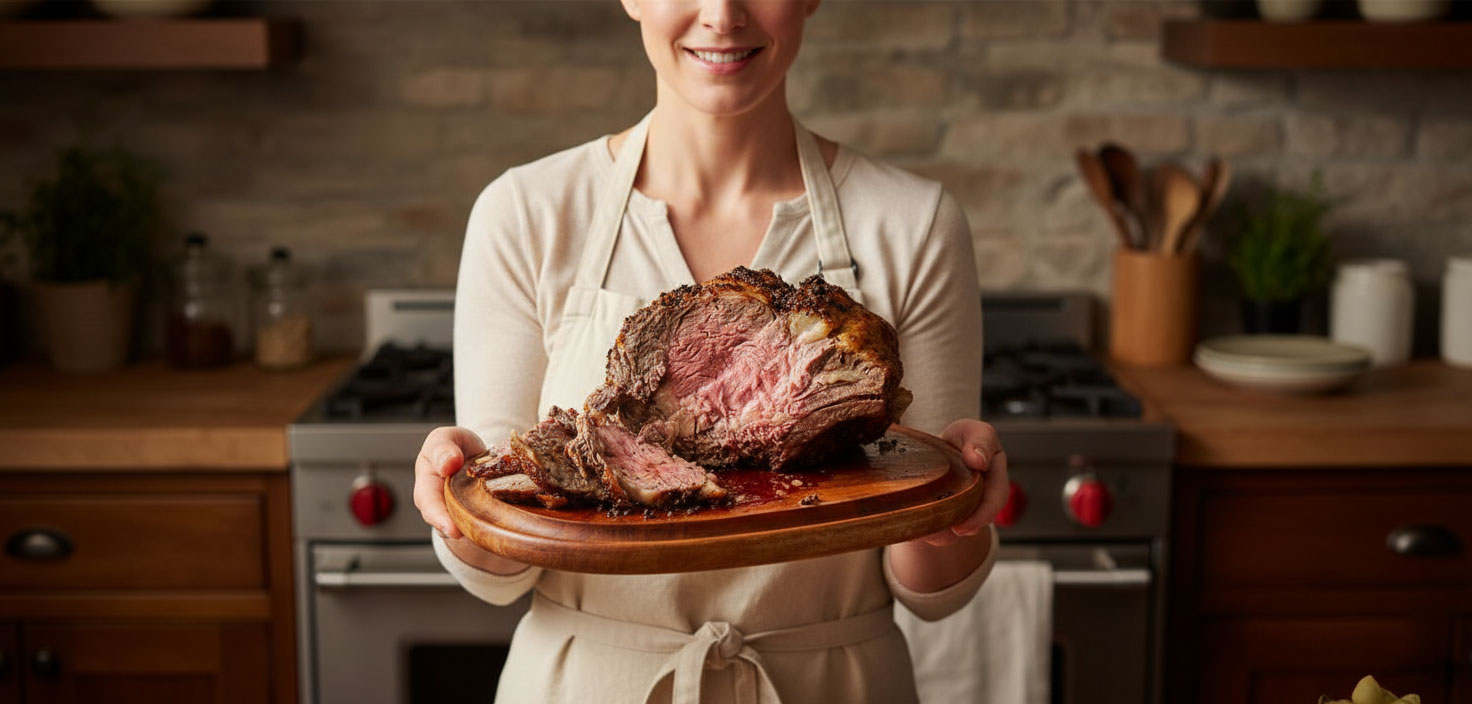
Ready to create a holiday centerpiece that will have everyone talking for years to come? This Garlic Herb Prime Rib Roast is the answer. With its crackling, savory crust and incredibly juicy, tender interior, this recipe is surprisingly simple yet delivers a truly show-stopping result. Forget intimidating roasts; this foolproof method guarantees a masterpiece every single time. Let’s get cooking!
Ingredients
• 1 10 lb / 4.5 kg grass-fed prime rib roast
• 10 garlic cloves, minced
• 2 tsp / 2 g dried thyme
• 2 tbsp / 30 ml olive oil
• Coarse salt and freshly ground black pepper, to taste
Instructions
1. Directions
2. Prepare the Garlic-Thyme Rub: In a small bowl, combine the minced garlic, dried thyme, olive oil, and a generous amount of salt and pepper. Mix until it forms a fragrant paste.
3. Season the Roast: Pat the entire prime rib roast completely dry with paper towels. Using your hands, generously coat the entire surface of the roast with the garlic-thyme rub, pressing it into the meat.
4. Temper the Meat: Place the seasoned roast, fat-side up, in a large roasting pan. Let it sit at room temperature for 1 hour. This step, known as tempering, helps the roast cook more evenly.
5. Initial High-Heat Sear: Preheat your oven to a blistering 500°F / 260°C. Place the roast in the oven and cook for 20 minutes to create a deep, flavorful crust.
6. Roast to Perfection: Reduce the oven temperature to 325°F / 163°C. Continue roasting for about 75 minutes for a medium-rare finish. For perfect results, use a meat thermometer inserted into the thickest part of the roast, avoiding bone. Pull the roast from the oven when it reaches 125°F / 52°C.
7. Rest is Best: Carefully transfer the roast to a cutting board and tent it loosely with aluminum foil. Let it rest for at least 15 minutes. This crucial step allows the juices to redistribute throughout the meat, ensuring every slice is moist and flavorful.
8. Carve and Serve: Carve the roast against the grain into your desired thickness. Serve immediately and enjoy the applause!
Nutritional Information
• Nutrition Information
• Servings: 15
• Calories: 499
• Carbohydrates: 0.6 g
• Fiber: 0.1 g
• Net Carbs: 0.5 g
Pro Tips
• for a Perfect Prime Rib
• For an even crispier crust and more deeply seasoned meat, salt the roast generously on all sides a day ahead. Leave it uncovered on a rack in the refrigerator. Pat dry before applying the garlic-herb rub.
• Cooking a large roast is about temperature, not time. An instant-read meat thermometer is your best friend for guaranteeing your prime rib is cooked exactly to your liking. Times are an estimate; temperature is a fact.
• Don’t discard the flavorful drippings in the bottom of the roasting pan! Skim off the excess fat and use the remaining juices to make a simple, delicious au jus or gravy to serve alongside the roast.
FAQ
Q: What is the best internal temperature for medium-rare prime rib
A: For a perfect medium-rare finish, pull the roast from the oven when a meat thermometer inserted into the thickest part reaches 125°F / 52°C. The temperature will rise slightly as it rests.
Q: How long should a prime rib rest before carving
A: You must let the prime rib rest for at least 15 minutes after cooking. Tent it loosely with foil during this time to allow the juices to redistribute, ensuring every slice is moist and tender.
Q: How do I get a crispy crust on my prime rib
A: This recipe creates a crispy crust by first searing the roast in the oven at a high temperature of 500°F / 260°C for 20 minutes. For an even crispier result, you can salt the roast and leave it uncovered in the refrigerator a day ahead.
Q: Is it necessary to let the prime rib sit at room temperature before cooking
A: Yes, letting the seasoned roast sit at room temperature for 1 hour is a crucial step called tempering. It helps the large roast cook more evenly from edge to center.