Master Ingredients
For the best results, use a kitchen scale for the gram measurements. Precision is the secret ingredient that separates a hobbyist from a professional.
- 1.0 lb (453.6g) cooked wild-caught shrimps, peeled and deveined
- 14.5 oz (411.1g) crushed tomatoes
- 0.5 tsp (2.5g) minced garlic
- 1.0 tsp (5.7g) salt
- 0.5 tsp (2.9g) seasoned salt
- 0.25 tsp (0.5g) ground black pepper
- 0.5 tsp (1.0g) crushed red pepper flakes
- 0.5 tsp (0.5g) dried basil
- 0.5 tsp (0.5g) dried oregano
- 0.5 tbsp (7.4ml) avocado oil
- 6.0 oz (177.4ml) chicken broth
- 2.0 tbsp (7.6g) minced fresh parsley
- 0.5 cup (50.0g) grated Parmesan cheese
Step-by-Step Instructions
Following these steps ensures the sauce develops a deep, rich profile without overcooking the delicate seafood.
- Combine the crushed tomatoes, chicken broth, avocado oil, minced garlic, salt, seasoned salt, black pepper, red pepper flakes, dried basil, and dried oregano in a 4-quart slow cooker.
- Stir the mixture thoroughly to ensure the spices and oils are evenly distributed throughout the tomato base.
- Secure the lid on the slow cooker and set the temperature to the low heat setting for a duration of 4.0 to 5.0 hours.
- Open the lid once the time has elapsed and gently fold in the 1.0 lb (453.6g) of cooked shrimps and the 2.0 tbsp (7.6g) of minced parsley.
- Increase the slow cooker setting to high heat and cook for an additional 10.0 minutes to allow the shrimps to heat through and absorb the flavors of the marinara.
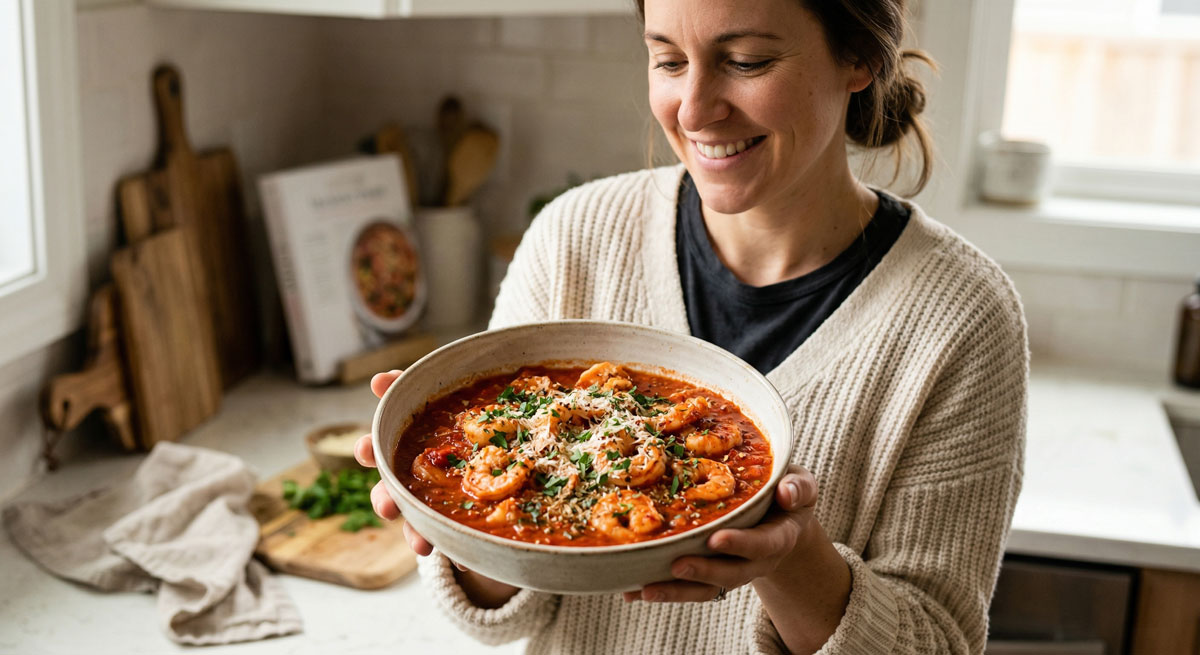
- Portion the dish into five servings and garnish each with the grated Parmesan cheese before serving immediately.
Nutritional Information (Per Serving)
Based on the specific ingredients provided and a yield of 5 servings, here is the approximate nutritional breakdown:
- Calories: 173.2 kcal
- Total Fat: 5.6g (28g total per recipe)
- Total Carbs: 6.6g (33g total per recipe)
- Protein: 23.7g (118.5g total per recipe)
Pro Tips for the Best Shrimp in Marinara Sauce
- Avoid Rubbery Seafood: Since the recipe calls for pre-cooked shrimp, the 10-minute high-heat window is strictly for warming them through. Adding them too early in the slow-cooking process will result in a tough, rubbery texture that detracts from the gourmet feel of the dish.
- Quality of Tomatoes Matters: Because the marinara is the base of the entire dish, use "San Marzano" style crushed tomatoes if possible. Their lower acidity and natural sweetness create a much richer sauce without needing added sugars.
- The Fresh Herb Finish: Always add the minced parsley at the very end with the shrimp. Fresh herbs lose their vibrant color and essential oils when subjected to 5 hours of heat; adding them late preserves that "fresh from the kitchen" aroma.
- Emulsify the Oil: Before starting the slow cooker, ensure you stir the avocado oil vigorously into the tomato and broth mixture. This helps create a smooth, consistent sauce texture rather than having oil droplets rise to the surface.
Frequently Asked Questions (FAQ)
1. Can I use raw shrimp instead of cooked shrimp for this recipe? Yes, you can substitute 1.0 lb (453.6g) of raw, peeled, and deveined shrimp. If using raw shrimp, add them during the final step and cook on the "High" setting for 15–20 minutes, or until they are pink and opaque throughout.
2. Is this Shrimp in Marinara Sauce keto-friendly? This recipe is naturally low-carb and fits well within a ketogenic lifestyle, containing approximately 6.6g of carbohydrates per serving. To keep the carb count as low as possible, ensure your crushed tomatoes have no added sugars or fillers.
3. What is the best way to serve this slow-cooked dish? For a traditional Italian experience, serve the Shrimp in Marinara Sauce over zoodles (zucchini noodles), spaghetti squash, or heart-of-palm pasta to keep it low-carb. If you aren't restricted by carbs, it pairs beautifully with al dente linguine or crusty sourdough bread.
4. How long can I store leftovers in the refrigerator? You can store any remaining portions in an airtight container for up to 2 days. When reheating, do so gently on the stovetop over low heat to prevent the shrimp from becoming overcooked and tough.