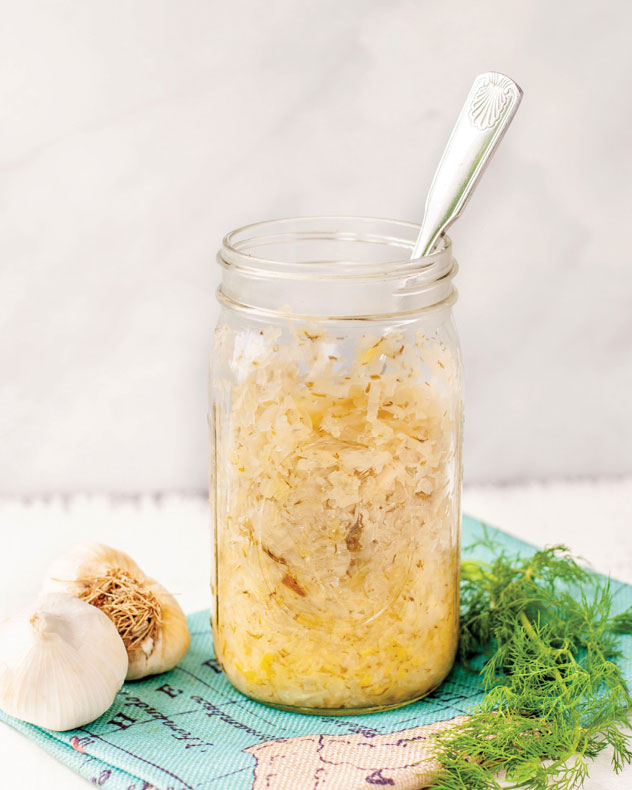
Ready to dive into the magical world of fermentation? This homemade Dill & Garlic Sauerkraut is your perfect starting point! It’s not just a tangy, delicious topping for your favorite dishes; it’s a gut-healing powerhouse packed with probiotics. Forget store-bought versions—making your own is incredibly simple, rewarding, and puts you in complete control of the flavor. Let’s get our hands dirty and create some gut-gold!
Ingredients
• MAKES: about 2 cups (¼ cup per serving) · PREP TIME: 20 minutes, plus time to ferment
• 1 small to medium head green cabbage, about 1.5 lbs or 680g, finely shredded (reserve 1 whole outer leaf)
• 3 cloves garlic, peeled
• 2 teaspoons sea salt
• 0.5 oz or 15g fresh dill, chopped
Instructions
1. Directions
2. In a large mixing bowl, combine the shredded cabbage, peeled garlic cloves, sea salt, and chopped dill. Get your hands in there and massage the mixture vigorously for several minutes to break down the cabbage and draw out its natural moisture, creating a brine.
3. Place a slightly smaller bowl directly on top of the cabbage mixture. Weigh it down with something heavy, like a few cans or a jar of water, to help extract even more liquid. Let it sit for 2 hours.
4. Tightly pack the cabbage and all of its liquid into a clean 32-ounce / 1-liter wide-mouth mason jar. Take the whole cabbage leaf you reserved earlier and place it on top, tucking it down the sides to keep the shredded cabbage submerged.
5. To ensure everything stays below the brine, place a smaller, clean jar or a fermentation weight inside the larger jar. It’s crucial that all the cabbage is submerged in the liquid to prevent mold and ensure proper fermentation.
6. Loosely cap the jar and place it on a plate or in a bowl (to catch any overflow) on your counter, away from direct sunlight. Let it ferment for 3 to 5 days. You’ll need to ‘burp’ the jar twice daily by briefly unscrewing the lid to release built-up gas, then pressing the cabbage back down below the brine before re-sealing.
7. After 3 days, give your sauerkraut a taste. If you love the flavor and crunch, it’s ready! Transfer the jar to the refrigerator to halt the fermentation process. For a tangier kraut, feel free to let it ferment on the counter for up to a month, tasting it every few days until it’s perfect for you.
Nutritional Information
• Per ¼ cup serving
• CALORIES: 19
• FAT: 0.1g
• PROTEIN: 1g
• TOTAL CARBS: 5.3g
• FIBER: 2.2g
• NET CARBS: 3.2g
Pro Tips
• Pro-Tips
• Use a kitchen scale to weigh your cabbage and salt for the most consistent results. A 2% salt-to-cabbage weight ratio is the gold standard for fermentation.
• If your cabbage doesn’t release enough natural brine to cover itself, top it off by dissolving 1 teaspoon of sea salt in 1 cup of filtered, non-chlorinated water.
• Keep your fermenting jar out of direct sunlight, as UV rays can harm the beneficial bacteria you’re trying to cultivate.
• Don’t be alarmed by bubbles or a cloudy brine! These are normal and healthy signs that fermentation is actively happening.
FAQ
Q: How long should I ferment my dill and garlic sauerkraut
A: Ferment your sauerkraut on the counter for 3 to 5 days for a mild flavor and good crunch. For a tangier, more potent kraut, you can continue fermenting for up to a month, tasting it every few days until it reaches your desired flavor. Once you’re happy with it, move it to the refrigerator to stop the fermentation process.
Q: What if my cabbage doesn’t make enough brine
A: If your cabbage doesn’t release enough natural liquid to cover itself, you can easily make a top-off brine. Simply dissolve 1 teaspoon of sea salt in 1 cup of filtered, non-chlorinated water and add just enough to ensure all the cabbage is fully submerged.
Q: How do I prevent mold on my homemade sauerkraut
A: The most crucial step to prevent mold is keeping all the cabbage completely submerged beneath the brine. The anaerobic (oxygen-free) environment of the brine prevents mold from growing. Use the reserved whole cabbage leaf and a fermentation weight or small jar to keep everything pressed down.
Q: Why is my sauerkraut brine cloudy and bubbly
A: A cloudy brine and visible bubbles are completely normal and are positive signs that healthy fermentation is happening. This indicates that the beneficial bacteria are actively converting sugars into lactic acid, which preserves the cabbage and creates its signature tangy taste.