Preparation Time: 5 minutes Cooking Time: 2 hours Servings: 2
Ingredients
- 12.0 oz (340.2g) wild-caught halibut fillet
- 1.0 tsp (5.9g) salt
- 0.5 tsp (1.1g) ground black pepper
- 1.5 tsp (0.6g) dried dill
- 1.0 tbsp (14.8ml) fresh lemon juice
- 3.0 tbsp (44.4ml) avocado oil
Directions
- Cut an 18.0-inch (45.7cm) piece of heavy-duty aluminum foil, place the halibut fillet directly in the middle of the sheet, and season it evenly on both sides with the salt and black pepper.
- Whisk together the dried dill, fresh lemon juice, and avocado oil in a small bowl until the emulsion is well combined.
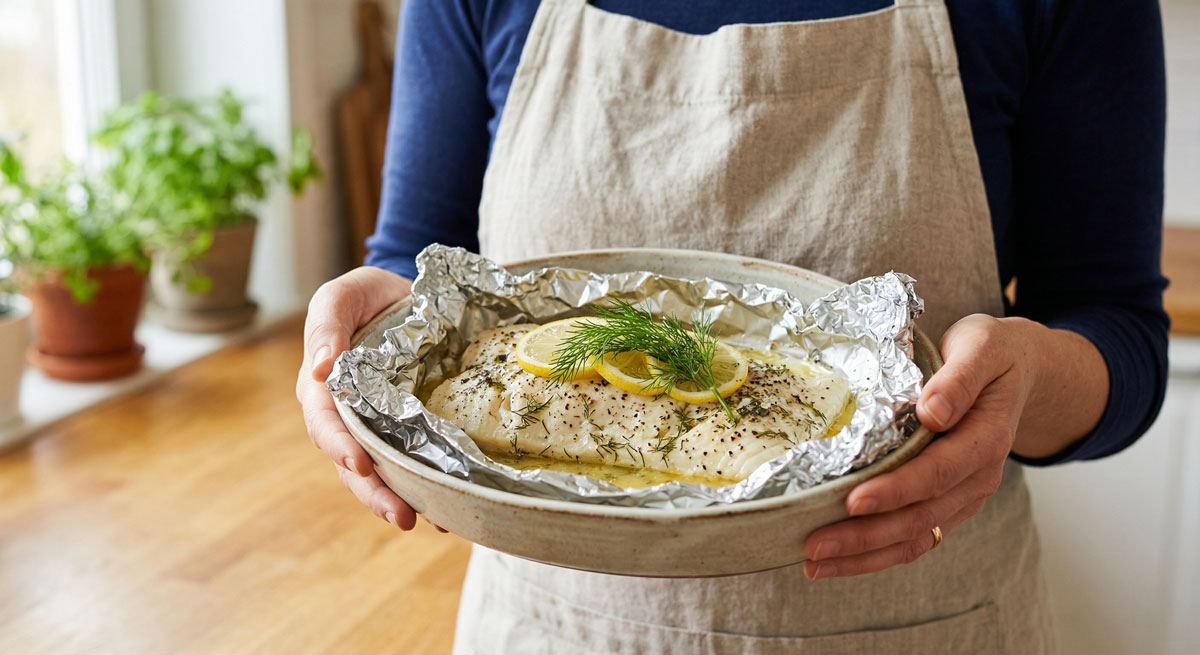
- Drizzle the lemon and oil mixture over the halibut fillet, then carefully fold and crimp the edges of the foil to create a sealed pouch, ensuring no steam can escape.
- Place the foil-wrapped fish into a 6.0-quart (5.7L) slow cooker, ensuring it sits flat on the bottom.
- Plug in the slow cooker, secure the lid tightly, and cook for 1.5 hours to 2.0 hours on the high heat setting until the internal temperature reaches 130-135°F (54-57°C).
- When the timer is up, carefully open the crimped foil edges (watch for hot steam!) and check the fish with a fork; it should be perfectly tender and flaky.
- Serve the Lemon Dill Halibut straightaway, perhaps with a side of steamed asparagus or over a bed of cauliflower rice.
Nutritional Information (Per Serving)
- Calories: 321.5 kcal
- Total Fat: 21.4g
- Net Carbohydrates: 0.8g
- Protein: 32.1g
Chef’s Pro Tips for the Best Lemon Dill Halibut
- Check the Temperature Early: Halibut is a very lean fish and can go from "perfectly flaky" to "overly firm" in a matter of minutes. Start checking the internal temperature at the 1 hour and 15-minute mark. You are aiming for an internal temperature of 130°F to 135°F (54-57°C).
- The Foil "Chimney" Trick: When crimping your foil, leave a tiny bit of headspace at the top of the pouch. This allows the lemon and dill steam to circulate properly around the fish, acting like a mini-convection oven inside your slow cooker.
- Quality Matters: Since this recipe uses very few ingredients, the quality of your oil is paramount. Use a high-quality, cold-pressed avocado oil or a premium extra virgin olive oil to ensure the fat enhances the delicate flavor of the halibut rather than masking it.
- Fresh Finish: While we use dried dill in the slow cooker because it holds its flavor better under sustained heat, I highly recommend topping the finished dish with a pinch of fresh dill and a zest of lemon just before serving to add a "pop" of bright color and aroma.
Frequently Asked Questions (FAQ)
Can I use frozen halibut for this recipe? Yes, you can use frozen halibut, but for the best texture, you must thaw it completely in the refrigerator overnight before cooking. Cooking fish from frozen in a slow cooker can result in an uneven texture and excess water release, which may dilute the lemon-dill sauce.
What is the best substitute for halibut in this slow cooker recipe? If halibut isn't available, other firm white fish like Cod, Sea Bass, or Grouper work beautifully. Keep in mind that thinner fillets (like Tilapia) will cook much faster, so you will need to reduce the slow cooker time significantly.
Can I cook this Lemon Dill Halibut on the "Low" setting? Absolutely. If you prefer a slower braise, you can cook the halibut on the Low setting for 3 to 4 hours. This slower method is even more forgiving and helps the dill flavors penetrate deeper into the fish.
How do I store and reheat leftovers? Store any remaining halibut in an airtight container in the fridge for up to 2 days. To reheat without drying it out, place the fish back in a foil pouch with a splash of water or broth and warm it in a 300°F (150°C) oven until just heated through.