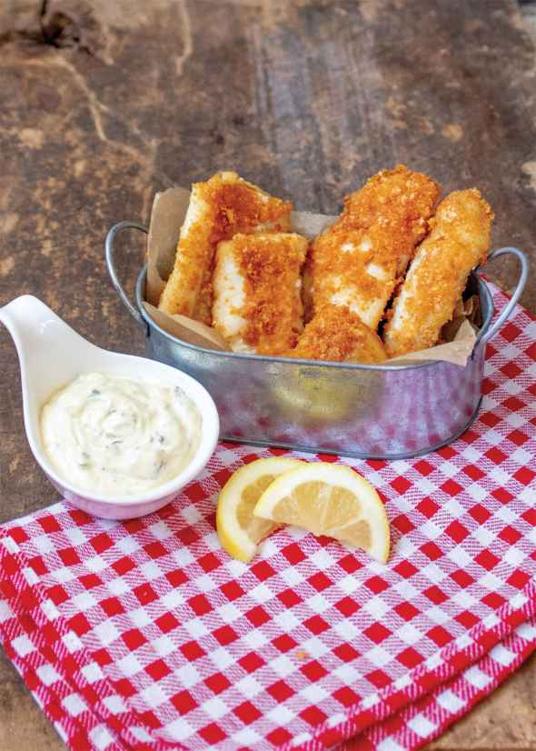
Craving that classic, crispy fried fish but sticking to a low-carb lifestyle? I’ve got you covered! This Keto Fried Fish recipe swaps traditional breading for a genius combination of crushed pork rinds and savory Parmesan cheese. The result is an unbelievably crunchy, golden-brown crust that will have you forgetting all about the carbs. It’s the perfect centerpiece for your next fish fry – satisfying, flavorful, and ready in under an hour. Let’s get frying!
Ingredients
• Avocado oil, lard, or other high-smoke point oil for frying
• 1 lb / 454 g firm white fish fillets, such as cod or haddock
• ½ cup / 45 g finely crushed pork rinds
• ½ cup / 50 g grated Parmesan cheese
• 1 large egg
• 2 tbsp / 30 ml heavy whipping cream
• For Serving
• Lemon wedges
• ½ cup / 120 g Tartar Sauce
Instructions
1. Prepare the oil. Attach a deep-fry thermometer to a Dutch oven or other large, heavy-bottomed pot. Pour in about 3 inches of oil and heat over medium-high heat until the thermometer registers 350°F / 175°C.
2. Set up breading stations. While the oil heats, pat the fish fillets completely dry with paper towels. In a shallow dish, combine the finely crushed pork rinds and grated Parmesan cheese. In a second shallow dish, whisk together the egg and heavy cream until smooth.
3. Bread the fish. Dip one fish fillet into the egg mixture, ensuring it’s fully coated, and allow any excess to drip off. Immediately transfer the fillet to the pork rind mixture, gently pressing the coating onto both sides to adhere.
4. Chill before frying. Place the breaded fillets on a wire rack or parchment-lined plate and refrigerate for at least 10 minutes. This helps the coating stick to the fish during frying.
5. Fry the fish. Working in small batches to avoid overcrowding the pot, carefully place the breaded fish into the hot oil. Fry for 2-3 minutes per side, until the crust is a deep golden brown and the fish is opaque and flakes easily with a fork.
6. Serve. Use a slotted spoon or spider strainer to transfer the cooked fish to a wire rack to drain. Serve immediately with fresh lemon wedges and your favorite tartar sauce.
Nutritional Information
• Nutrition Information
• Yield: 4 servings, Serving Size: 1 fillet
• Calories: 325
• Fat: 18g
• Protein: 38g
• Net Carbs: 1g
• This is an estimated nutrition calculation. The actual fat and calorie count will vary depending on the amount of oil absorbed during frying.
Pro Tips
• for the Crispiest Fish
• Ensure your fish fillets are patted completely dry with paper towels before breading. Any moisture will create steam and prevent the crust from getting super crispy.
• Use a thermometer to maintain the oil temperature at 350°F (175°C). If the oil is too cool, the fish will absorb too much and become greasy; if it’s too hot, the crust will burn before the fish is cooked through.
• Do not overcrowd the pot. Frying in small batches helps the oil maintain its temperature, ensuring each piece of fish cooks evenly and develops a perfectly golden crust.
• Choose a firm white fish for the best results. Cod, haddock, pollock, and halibut are excellent choices because they are sturdy enough to hold up to frying without falling apart.
FAQ
Q: What is the best fish for this keto recipe
A: For the best results, choose a firm white fish that holds up well to frying. Cod, haddock, pollock, and halibut are all excellent choices because they are sturdy and won’t fall apart.
Q: How do I get the pork rind breading to stick to the fish
A: To ensure the breading adheres, first pat the fish fillets completely dry. Dip them in the egg wash, then press them firmly into the pork rind and Parmesan mixture. Chilling the breaded fillets for at least 10 minutes before frying also helps the coating set and stick.
Q: What is the best oil for frying keto fish
A: Use a high-smoke point oil to prevent burning and ensure a crispy crust. The recipe recommends avocado oil or lard, but any neutral oil suitable for high-temperature frying will work.
Q: Why is my keto fried fish greasy
A: Greasy fish is usually caused by the oil temperature being too low. Use a deep-fry thermometer to maintain a consistent temperature of 350°F (175°C). Frying in small batches also helps prevent the oil temperature from dropping.