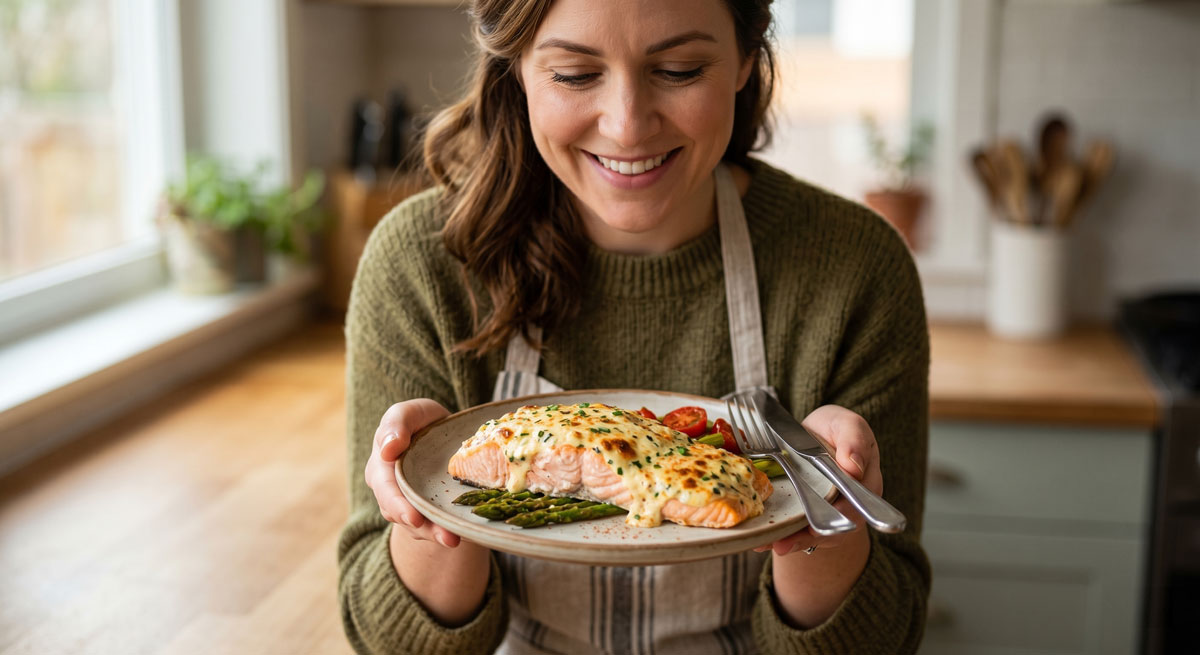
Ingredients
- 0.25 cup (2 oz / 57g) cream cheese, softened
- 2 tbsp (0.1 oz / 3g) fresh chives, chopped
- 1 tsp (0.1 oz / 3g) garlic powder
- 0.25 tsp (0.03 oz / 1g) cayenne pepper
- 0.25 tsp (0.05 oz / 1.5g) kosher salt
- 0.25 tsp (0.03 oz / 1g) black pepper
- 2 (4 oz / 113g) salmon fillets
Step-by-Step Instructions
- Preheat the oven to 350°F (175°C) and lightly grease a small baking dish.
- In a bowl, add the 0.25 cup (2 oz / 57g) softened cream cheese, 2 tbsp (0.1 oz / 3g) fresh chives, 1 tsp (0.1 oz / 3g) garlic powder, 0.25 tsp (0.03 oz / 1g) cayenne pepper, 0.25 tsp (0.05 oz / 1.5g) salt, and 0.25 tsp (0.03 oz / 1g) black pepper, and mix well until completely smooth.
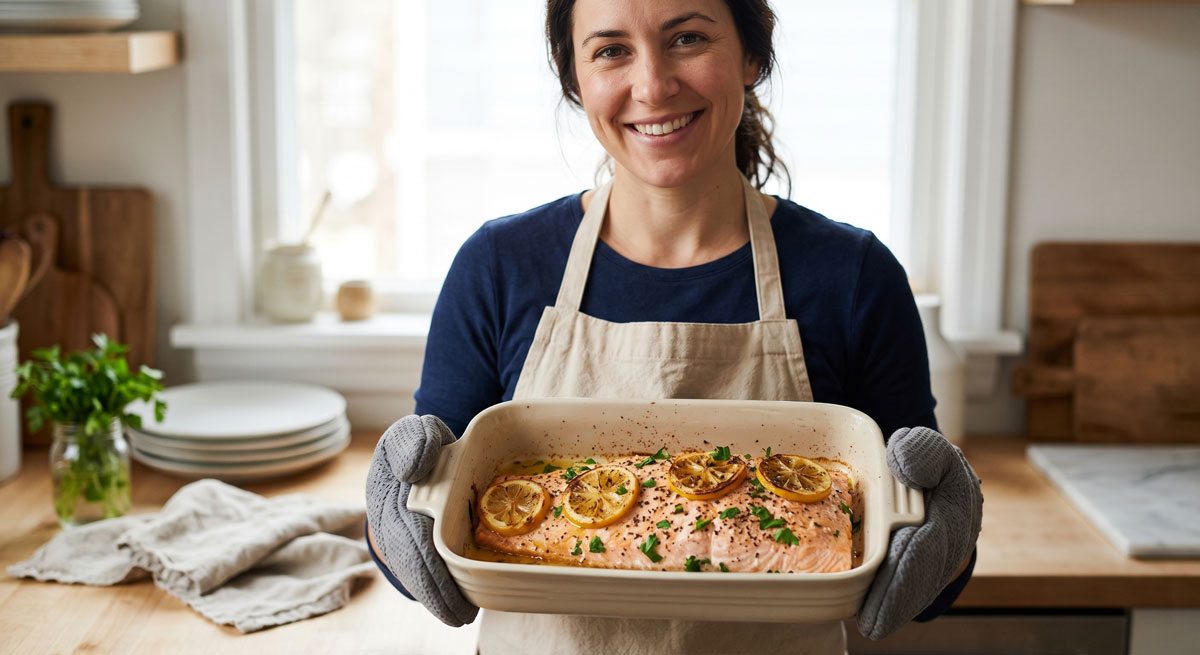
- Arrange the 2 (4 oz / 113g) salmon fillets into the prepared baking dish so they are not overlapping.
- Top the salmon fillets with the cream cheese mixture, spreading it evenly across the surface of each fillet.
- Bake for about 15 to 20 minutes, or until the fish flakes easily with a fork and reaches an internal temperature of 145°F (63°C).
- Remove the salmon fillets from the oven and serve hot.
Nutritional Information
(Approximate values per serving)
- Calories: 257 kcal
- Carbohydrates: 2.1g
- Protein: 24.6g
- Fat: 16.7g
Chef’s Pro Tips
As a chef, I always look for small tweaks that elevate a simple home-cooked meal into a restaurant-quality experience. Here is how to get the most out of your salmon:
- Pat the Salmon Dry: Before adding any toppings, use a paper towel to thoroughly pat the salmon fillets dry. This removes excess surface moisture, ensuring the cream cheese mixture adheres properly to the fish rather than sliding off during baking.
- Use Room Temperature Cream Cheese: Trying to mix and spread cold cream cheese will tear the delicate flesh of the salmon. Ensure your cream cheese is completely softened to room temperature for a smooth, effortless spread.
- Broil for a Golden Finish: If you want that beautiful, bubbly, golden-brown crust on your topping, switch your oven to broil for the final 1 to 2 minutes of cooking. Keep a close eye on it so the chives don't burn!
- Check Internal Temperature: Overcooked salmon becomes dry and chalky. For perfectly moist and flaky fish, use a digital meat thermometer inserted into the thickest part of the fillet. Aim for 145°F (63°C).
Frequently Asked Questions (FAQ)
Can I use frozen salmon for this Cream Cheese Baked Salmon recipe? Yes, you can absolutely use frozen fillets for this easy baked salmon recipe. Just be sure to thaw them completely in the refrigerator overnight before cooking. Pat them extra dry, as previously frozen salmon tends to hold onto more water.
What side dishes pair best with this low-carb salmon dinner? Because the cream cheese topping is rich and decadent, this dish pairs beautifully with light, fresh sides. Roasted asparagus, garlic butter green beans, a crisp cucumber salad, or zucchini noodles are all fantastic options to keep the meal keto-friendly and balanced.
How do I store and reheat leftover baked salmon? Store any leftover salmon in an airtight container in the refrigerator for up to 3 days. To reheat without drying out the fish, place it in a baking dish, cover loosely with foil, and warm it in a 275°F (135°C) oven for about 15 minutes, or until just heated through. Avoid the microwave, as it can make the fish rubbery and alter the flavor.
Can I substitute the full-fat cream cheese with a lighter option? Yes, you can substitute Neufchâtel cheese or a low-fat cream cheese to reduce the calories and fat. The spread will still be delicious and creamy, though it may be slightly less rich and might not brown quite as deeply in the oven.