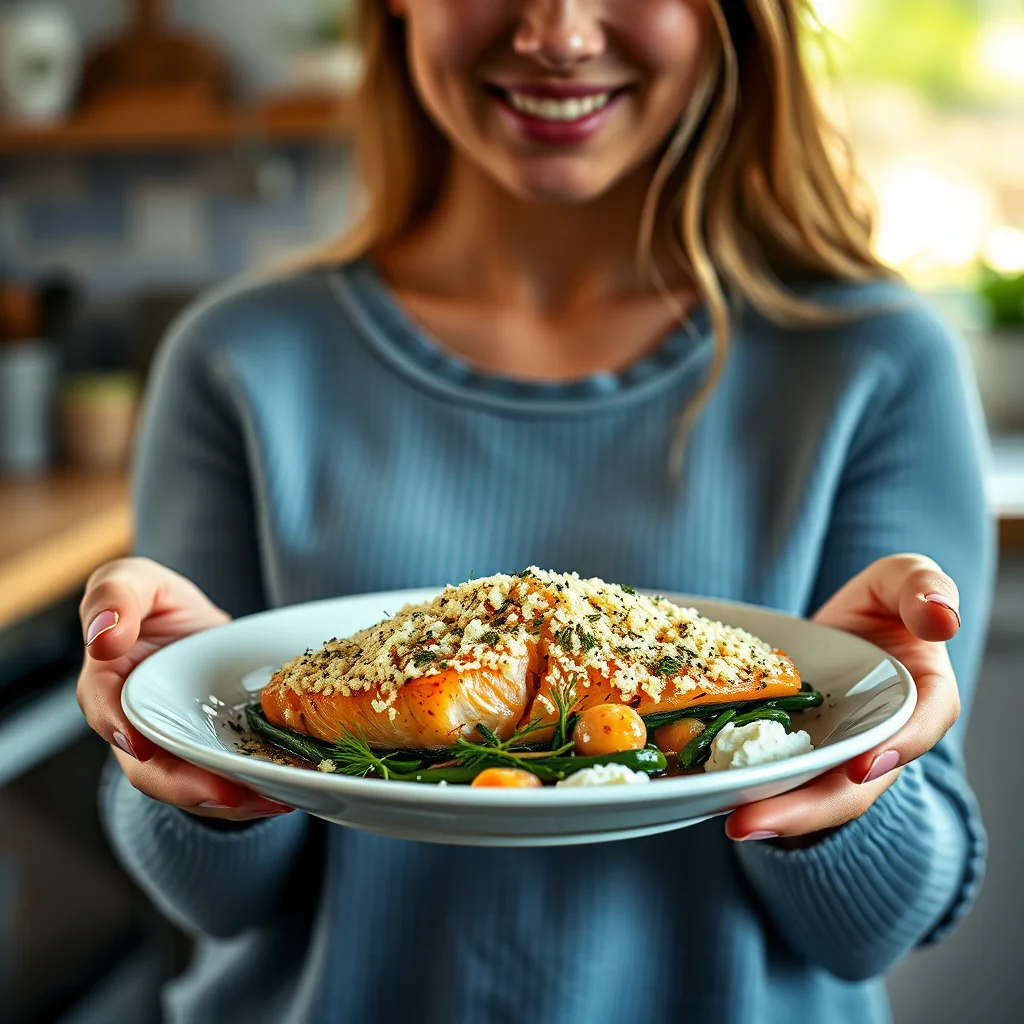
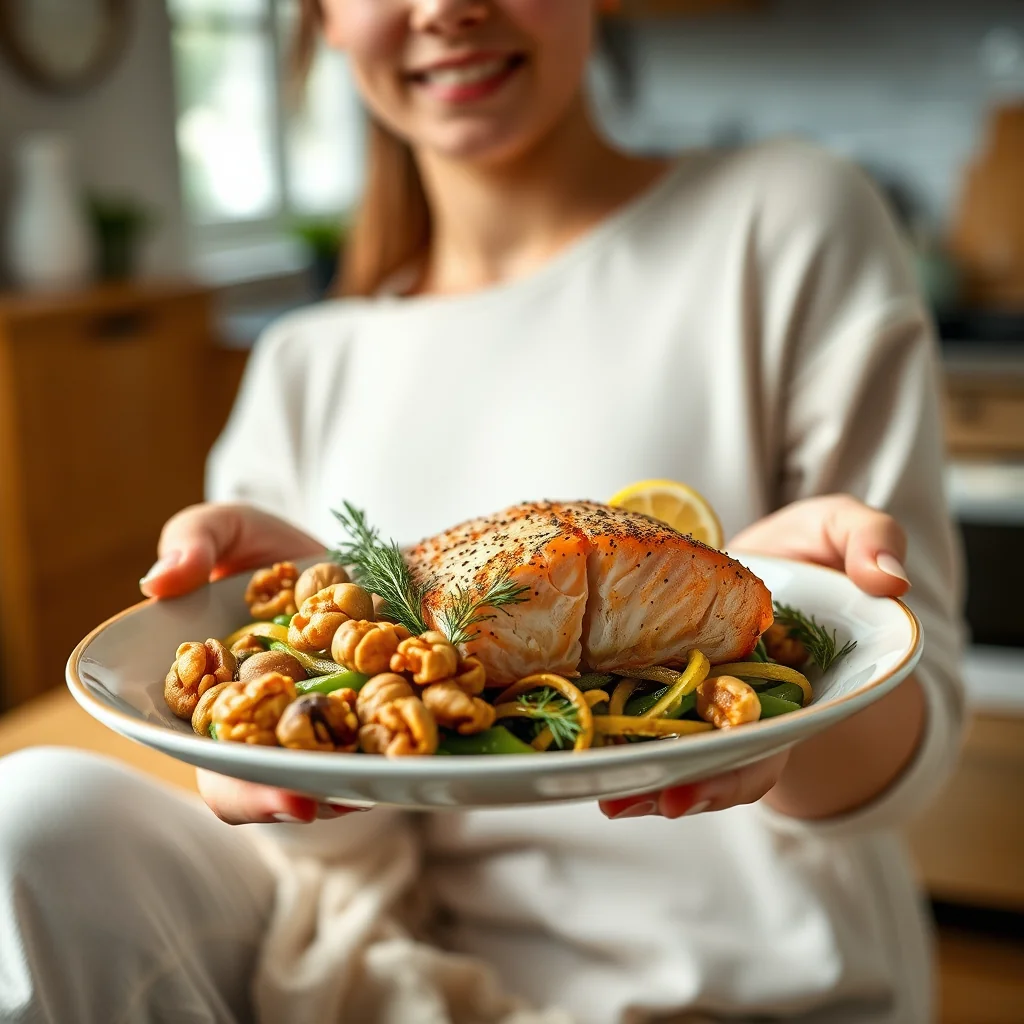
Hit salmon dinner earns its name with a buttery walnut-dill crust over Dijon-rubbed fillets. The crumble pulses together in a food processor while the oven warms, then bakes over the salmon until golden. A squeeze of lemon over the top finishes it in style.
Ingredients
To ensure perfect results every time, use these precise measurements for your Walnut Crusted Salmon:
- 1.0 cup (3.5 oz / 100g) walnuts
- 1.0 tbsp (0.1 oz / 3g) fresh dill, chopped
- 2.0 tbsp (0.4 oz / 12g) fresh lemon rind, grated
- 0.5 tsp (0.1 oz / 3g) garlic salt
- 1.0 tbsp (0.5 oz / 14g) butter, melted
- 4.0 tbsp (2.1 oz / 60g) Dijon mustard
- 4 (3.0 oz / 85g) salmon fillets
- 4.0 tsp (0.7 oz / 20g) fresh lemon juice
- 0.1 tsp (0.03 oz / 1g) black pepper (optional, to taste)
Step-by-Step Instructions
- Preheat the oven to 350°F (175°C). Line a large baking sheet with parchment paper to prevent sticking and ensure an easy cleanup.
- In a food processor, place the 1.0 cup (3.5 oz / 100g) of walnuts and pulse briefly until they are roughly chopped.
- Add the chopped dill, grated lemon rind, garlic salt, black pepper, and melted butter to the walnuts in the processor. Pulse until the ingredients combine into a crumbly mixture.
- Place the salmon fillets onto the prepared baking sheet in a single layer, making sure the skin-side is facing down.
- Evenly rub the top of each salmon fillet with the Dijon mustard, using about 1.0 tbsp (0.5 oz / 15g) per fillet.
- Spoon the prepared walnut mixture equally over each fillet. Gently press the mixture down into the surface of the salmon so it adheres to the mustard layer.
- Bake in the preheated oven for 15 to 20 minutes, or until the salmon easily flakes with a fork and the crust is lightly golden.
- Remove the baking sheet from the oven and carefully transfer the salmon fillets onto serving plates.
- Drizzle the 4.0 tsp (0.7 oz / 20g) of fresh lemon juice evenly over the hot fillets and serve immediately.
Nutritional Information
Here is the approximate nutritional breakdown per serving. This recipe is packed with healthy fats and high-quality protein to keep you fueled and satisfied!
- Calories: 691 kcal
- Carbohydrates: 10.3g (0.36 oz)
- Protein: 49.8g (1.76 oz)
- Fat: 50.1g (1.77 oz)
Pro Tips
As a chef, I always rely on a few simple kitchen tricks to elevate a dish from good to restaurant-quality. Follow these tips to ensure your Walnut Crusted Salmon turns out flawlessly every time:
- Pat the Fish Dry: Before applying the Dijon mustard, use a paper towel to thoroughly pat your salmon fillets dry. This helps the mustard bind to the fish and prevents the walnut crust from becoming soggy.
- Don't Over-Process the Crust: When pulsing the walnuts in your food processor, aim for a rough chop rather than a fine powder. Leaving some texture ensures that beautiful, buttery crunch that makes this Walnut Crusted Salmon so irresistible.
- Watch the Bake Time Closely: Salmon cooks quickly, and nuts can burn if left unattended. Check the fish at the 15-minute mark. You want the internal temperature to reach 145°F (63°C) and the crust to be lightly golden.
- Let It Rest: Give your salmon about 3 to 5 minutes to rest on the baking sheet after removing it from the oven. This allows the juices to redistribute and helps the crust set perfectly before plating.
Frequently Asked Questions
Can I use frozen fillets for Walnut Crusted Salmon? Yes, you can absolutely use frozen salmon! Just make sure to thaw the fillets completely in the refrigerator overnight. Before cooking, gently squeeze out any excess water and pat them completely dry so the mustard and crust adhere properly.
What are the best side dishes to serve with Walnut Crusted Salmon? Because this dish is rich in healthy omega-3 fats and protein, it pairs beautifully with light, fresh sides. Try serving it with roasted asparagus, a crisp green salad with vinaigrette, or garlic parmesan green beans. For a heartier meal, a side of quinoa or wild rice is excellent.
How do I store and reheat leftover Walnut Crusted Salmon? Store any leftover salmon in an airtight container in the refrigerator for up to 2 days. To reheat without drying out the fish or ruining the crust, place it in an oven heated to 275°F (135°C) for about 10-15 minutes until just warmed through. Avoid the microwave, as it will make the walnut crust soggy and overcook the fish.
Can I substitute the walnuts with another type of nut? Definitely! While Walnut Crusted Salmon is a classic pairing, pecans, almonds, or pistachios work wonderfully using the exact same measurements and method. Pecans will give a slightly sweeter flavor, while pistachios add a vibrant color and earthy taste.
Pro Tips
- Pulse the walnuts to a rough chop, not a powder — the uneven texture is what makes the crust buttery and crunchy rather than pasty.
- Pat the fillets dry before brushing on the Dijon; the mustard grips dry flesh and keeps the walnut topping from sliding off.
- Watch the oven around the 15-minute mark — salmon overcooks quickly and the walnut crust can go from golden to dark fast.
- Press the crumble gently onto the mustard layer so it adheres while baking, then let the fillets rest 3–5 minutes so the crust sets before plating.
- Dijon brands vary in sugar; pick a sugar-free Dijon to keep this keto main at 10.3g of carbs per serving.
Frequently Asked Questions
Can I make the walnut crust ahead?
Yes — pulse the walnut-dill mixture up to 2 days ahead and refrigerate it. Press it onto the mustard-coated salmon just before baking.
Can I freeze the crusted salmon?
Freeze the raw, crusted fillets on a sheet pan, then bag them; bake from thawed so the walnut topping crisps instead of steaming.
Is hit salmon dinner keto-compatible?
Yes — walnuts, butter, and Dijon give 50.1g of fat per serving against 10.3g of carbs, well within keto range.
What can I use instead of walnuts?
Pecans or almonds pulse to the same crumbly texture and keep the crust keto — toast them lightly first for deeper flavor.
Recipe card below.
More Recipes You'll Love
- 15-Minute Keto Garlic Butter Shrimp
- Dutch Oven Pot Roast
- One-Pan Pot Roast with Individual Keto Serving
Ingredients
Method
- Preheat the oven to 350°F (175°C).
- Line a large baking sheet with parchment paper to prevent sticking and ensure an easy cleanup.
- In a food processor, place the 1. 0 cup (3. 5 oz / 100g) of walnuts and pulse briefly until they are roughly chopped.
- Add the chopped dill, grated lemon rind, garlic salt, black pepper, and melted butter to the walnuts in the processor. Pulse until the ingredients combine into a crumbly mixture.
- Place the salmon fillets onto the prepared baking sheet in a single layer, making sure the skin-side is facing down.
- Evenly rub the top of each salmon fillet with the Dijon mustard, using about 1. 0 tbsp (0. 5 oz / 15g) per fillet.
- Spoon the prepared walnut mixture equally over each fillet. Gently press the mixture down into the surface of the salmon so it adheres to the mustard layer.
- Bake in the preheated oven for 15 to 20 minutes, or until the salmon easily flakes with a fork and the crust is lightly golden.
- Remove the baking sheet from the oven and carefully transfer the salmon fillets onto serving plates.
- Drizzle the 4. 0 tsp (0. 7 oz / 20g) of fresh lemon juice evenly over the hot fillets and serve immediately.
- Pat the Fish Dry: Before applying the Dijon mustard, use a paper towel to thoroughly pat your salmon fillets dry. This helps the mustard bind to the fish and prevents the walnut crust from becoming soggy.
- Don't Over-Process the Crust: When pulsing the walnuts in your food processor, aim for a rough chop rather than a fine powder. Leaving some texture ensures that beautiful, buttery crunch that makes this Walnut Crusted Salmon so irresistible.
- Let It Rest: Give your salmon about 3 to 5 minutes to rest on the baking sheet after removing it from the oven. This allows the juices to redistribute and helps the crust set perfectly before plating.