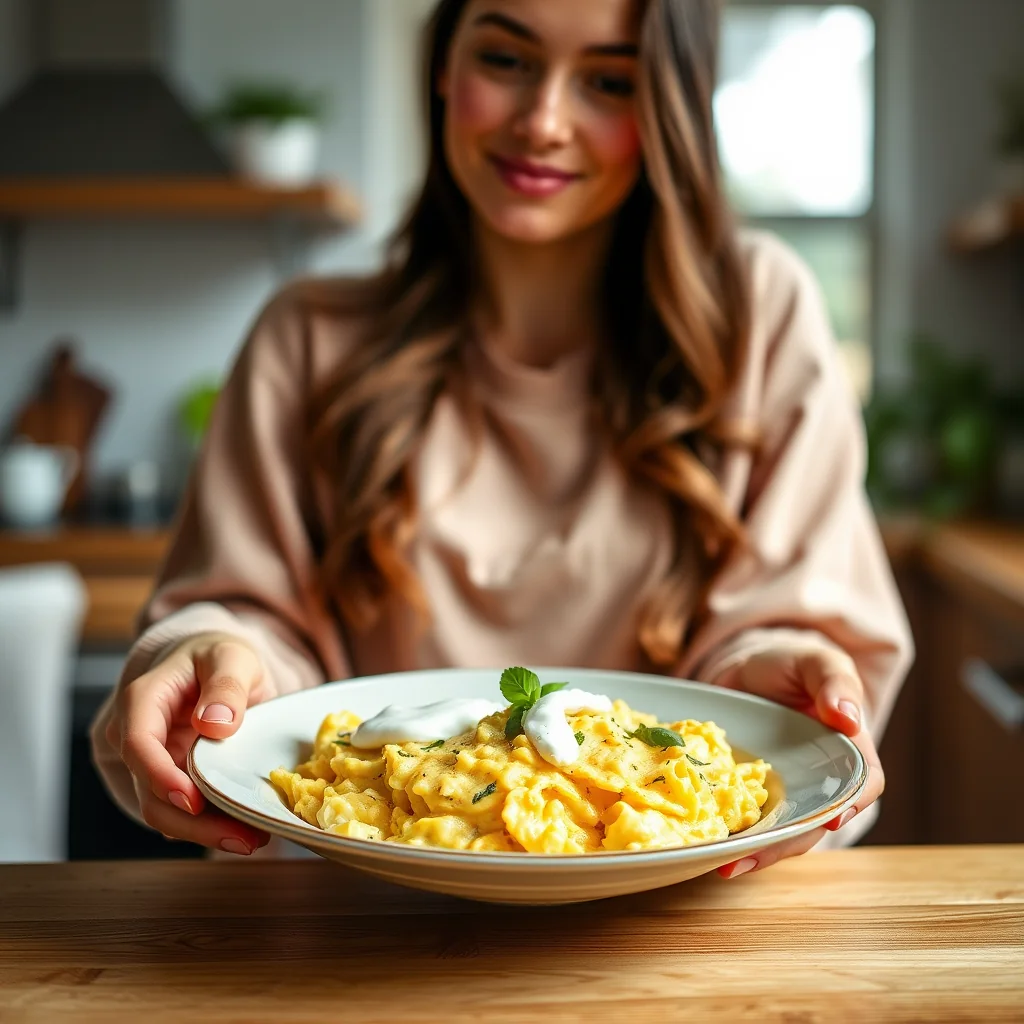
Creamy basil scrambled eggs with coconut cream whisk four eggs with full-fat coconut cream and finely chopped fresh basil. They cook low and slow in melted butter into large, soft, cloud-like curds in about 5 minutes. High in healthy fats and low in carbs, this is a keto breakfast worth waking up for.
Forget everything you know about dry, rubbery scrambled eggs. We’re talking about luxuriously creamy, cloud-like eggs infused with the fresh, aromatic flavor of basil and the rich decadence of coconut cream. This isn’t just breakfast; it’s a 5-minute escape to a gourmet morning. Whether you’re keto, low-carb, or just a lover of incredible food, this recipe will become your new go-to.
Ingredients
• 2 ounces / 57g (2.01 oz) unsalted butter
• 4 large eggs
• 4 tbsp / 60ml full-fat coconut cream, coconut milk, or sour cream
• 4 tbsp (60 ml) fresh basil, finely chopped
• Sea salt and freshly ground black pepper, to taste
Instructions
1. Directions
2. Place a non-stick skillet over low heat. Add the butter and allow it to melt completely, swirling to coat the bottom of the pan.
3. In a medium bowl, vigorously whisk together the eggs, coconut cream, and chopped basil until the mixture is pale, frothy, and uniform. Season with salt and pepper.
4. Pour the egg mixture into the warm skillet. Let it sit undisturbed for about 20-30 seconds until the edges just begin to set.
5. Using a silicone spatula, gently push the eggs from the edges toward the center, creating large, soft curds.
6. Continue this gentle pushing motion until the eggs are mostly set but still have a slight sheen of moisture. Remove the pan from the heat immediately, as the residual heat will finish the cooking.
7. Serve immediately for the best texture, garnished with an extra sprig of basil if desired.
Nutritional Information
• Nutrition (per serving)
• Calories: 427
• Fat: 42g
• Protein: 13g
• Note: Nutrition is an estimate and may vary based on used.
Pro Tips
• For the creamiest, most tender curds, always cook your eggs over low heat. High heat leads to tough, rubbery eggs.
• A silicone or rubber spatula is your best friend. It won’t scratch your non-stick pan and is flexible enough to scrape the sides cleanly, ensuring even cooking.
• If meal prepping, slightly undercook the eggs. They will finish cooking when you reheat them, preventing them from becoming dry.
• Don’t have basil? Fresh chives, dill, or parsley also work beautifully in this recipe.
FAQ
Q: What makes these scrambled eggs so creamy
A: The creaminess comes from two key elements: using full-fat coconut cream and cooking the eggs slowly over low heat. This method creates large, soft curds and prevents the eggs from becoming dry and rubbery.
Q: Is this creamy basil scrambled eggs recipe keto-friendly
A: Yes, this recipe is perfect for a keto or low-carb diet. It is high in healthy fats from butter and coconut cream and very low in carbohydrates, making it a satisfying and compliant breakfast option.
Q: Can I use a different herb instead of basil
A: Absolutely. If you don’t have fresh basil, this recipe works beautifully with other fresh herbs. Try substituting with finely chopped chives, dill, or parsley for a different but equally delicious flavor.
Q: How do I prevent my scrambled eggs from getting rubbery
A: The secret to avoiding rubbery eggs is to cook them over low heat. High heat causes the proteins to tighten up quickly, resulting in a tough texture. Cook them gently and remove the pan from the heat while they still have a slight sheen of moisture, as they will continue to cook.
Pro Tips
- Cook the eggs over low heat the whole time. High heat tightens the proteins quickly and turns creamy curds tough and rubbery.
- Whisk the eggs, coconut cream, and basil vigorously until the mixture is pale and frothy before it goes into the pan. The air you whip in is what makes the curds light.
- Use a silicone or rubber spatula to gently push the eggs from the edges toward the center. It glides along the non-stick pan without scratching and builds large, soft curds.
- Pull the pan from the heat while the eggs still carry a slight sheen of moisture. Residual heat finishes the cooking so the last minute does not dry them out.
- No basil on hand? Finely chopped fresh chives, dill, or parsley all work beautifully. For meal prep, slightly undercook the eggs so they finish warming up without drying.
Frequently Asked Questions
What makes these scrambled eggs so creamy?
Full-fat coconut cream and gentle, low-heat cooking do the work. Whisking the eggs with the cream and pulling the pan early keeps the curds large, soft, and silky.
Is this basil scrambled eggs recipe keto-friendly?
Yes, the butter and coconut cream make it high in healthy fats and very low in carbs. Each serving has about 427 calories, 42g of fat, and just 2g of carbohydrates.
Can I use a different herb instead of basil?
Absolutely, finely chopped chives, dill, or parsley are all delicious substitutes. The coconut cream base pairs well with any of them.
How do I prevent my scrambled eggs from getting rubbery?
Cook them slowly over low heat and remove the pan while they still have a slight sheen of moisture. The residual heat finishes the cooking without toughening the proteins.
Recipe card below.
More Recipes You’ll Love
- Nutrient-Dense Keto Bolognese with Hidden Liver
- Instant Pot Saucy Trout with Chives
- Simple Homemade Kimchi Recipe
Creamy Basil Scrambled Eggs with Coconut Cream
Ingredients
Method
- Directions
- Place a non-stick skillet over low heat.
- Add the butter and allow it to melt completely, swirling to coat the bottom of the pan.
- In a medium bowl, vigorously whisk together the eggs, coconut cream, and chopped basil until the mixture is pale, frothy, and uniform.
- Season with salt and pepper.
- Pour the egg mixture into the warm skillet.
- Let it sit undisturbed for about 20-30 seconds until the edges just begin to set.
- Using a silicone spatula, gently push the eggs from the edges toward the center, creating large, soft curds.
- Continue this gentle pushing motion until the eggs are mostly set but still have a slight sheen of moisture.
- Remove the pan from the heat immediately, as the residual heat will finish the cooking.
- Serve immediately for the best texture, garnished with an extra sprig of basil if desired.
- Don't have basil? Fresh chives, dill, or parsley also work beautifully in this recipe.