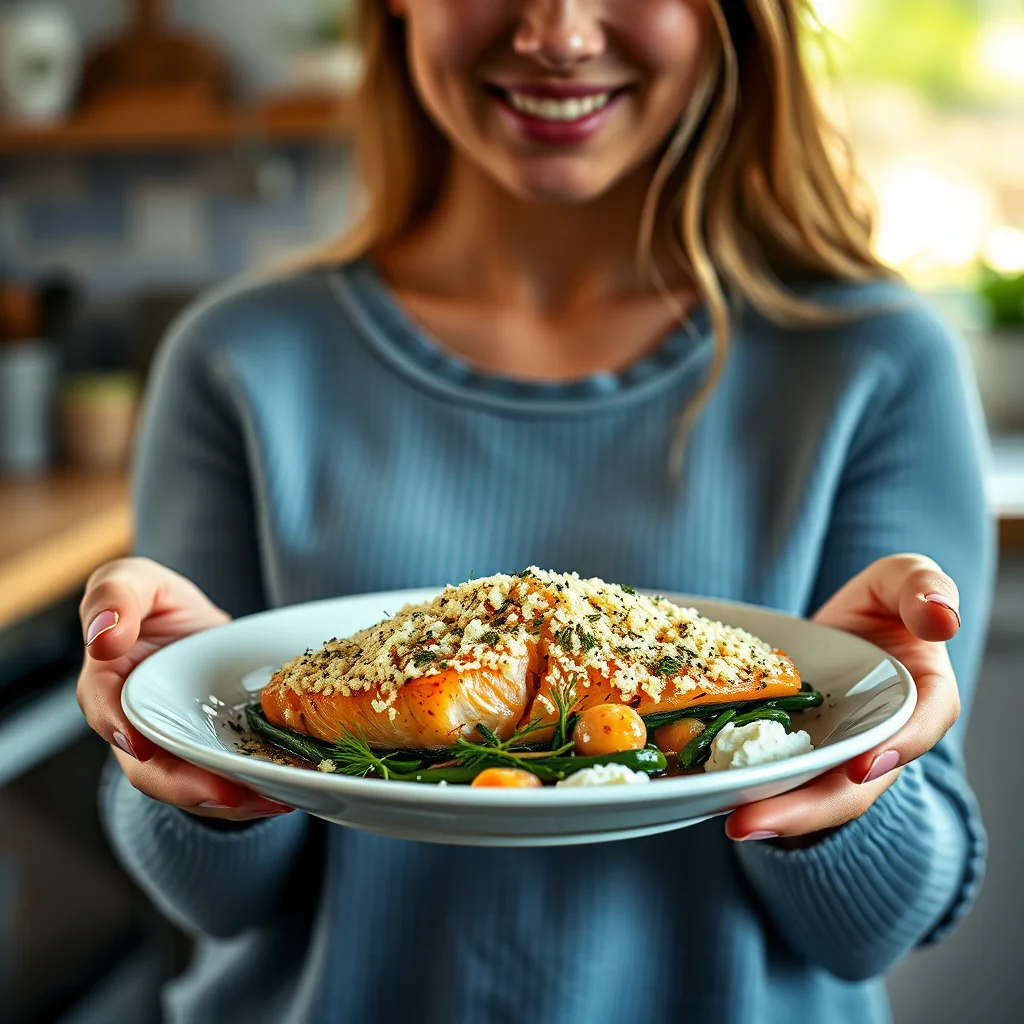
Effortless Parchment Baked Salmon (En Papillote) seals a basil-stuffed salmon fillet with lemon rounds inside a parchment packet and lets trapped steam do all the cooking. Cut it open at the table and the aroma makes the presentation. One serving carries 20g of protein for just 1.5g of carbs.
Craving a meal that feels elegant but is secretly effortless? This Parchment Baked Salmon is your answer. Using the classic ‘en papillote’ method, the salmon steams in its own aromatic juices, resulting in an incredibly moist, flaky fish every single time. It’s the perfect healthy dinner for a busy weeknight when you want something special without the cleanup.
Ingredients
• Salmon: 8.0 oz / 227g boneless salmon fillet
• Basil: 0.25 cups / 10g (0.35 oz) fresh basil leaves, finely chopped
• Lemon: 1 medium lemon, sliced into thin rounds
• Oil: 0.2 oz / 6g olive oil cooking spray, divided
• Seasoning: 0.25 tsp / 1.5g (0.05 oz) sea salt and 0.25 tsp / 1.5g (0.05 oz) freshly ground black pepper
Instructions
1. Preheat oven to 400°F / 205°C. Line a baking sheet with a large piece of parchment paper and lightly coat with half the olive oil spray.
2. Place the salmon fillet skin-side down in the center of the parchment. Carefully cut 2-3 shallow slits across the top of the fish.
3. Stuff the chopped basil into the slits. Season generously with salt and pepper, coat with the remaining olive oil spray, and top with lemon slices.
4. Create a packet by folding the long sides of the parchment paper over the salmon and crimping the edges tightly to seal completely.
5. Bake for 25 minutes, or until the internal temperature reaches 145°F / 63°C. Let the packet rest for 8 minutes before carefully cutting it open to serve.
Nutritional Information
• Calories: 165 kcal
• Protein: 20g
• Total Fat: 9g
• Total Carbohydrates: 1.5g (0.05 oz)
• Fiber: 0.2g
Pro Tips
• Ensure your parchment packet is sealed tightly by crimping the edges. This traps the steam, which is the key to moist, tender salmon.
• Use a digital meat thermometer to check for doneness. Aim for an internal temperature of 145°F / 63°C for perfectly cooked, flaky fish.
• Tuck the basil deep into the slits cut into the salmon. This infuses the entire fillet with flavor as it steams.
• Let the sealed packet rest for at least 5-8 minutes after baking. This allows the juices to redistribute, guaranteeing a succulent result.
FAQ
Q: How do I know when my parchment baked salmon is done
A: The best way to ensure your salmon is perfectly cooked is to use a digital meat thermometer. Bake the salmon until its internal temperature reaches 145°F (63°C). This should take approximately 25 minutes in a 400°F (200°C) oven.
Q: Why is it important to seal the parchment packet tightly
A: A tight seal is the key to the ‘en papillote’ method. Crimping the edges securely traps the steam inside the packet. This steam gently cooks the salmon in its own juices, keeping it incredibly moist and infusing it with flavor.
Q: Should I let the salmon rest after baking
A: Yes, letting the sealed packet rest for 5 to 8 minutes after removing it from the oven is a crucial step. This allows the juices to redistribute throughout the fillet, guaranteeing a more succulent and flavorful result.
Q: What is the best way to get flavor into the salmon
A: This recipe infuses flavor by cutting shallow slits across the top of the fish and stuffing them with finely chopped fresh basil. Topping the salmon with lemon slices before sealing the packet also adds aromatic flavor as it steams.
Pro Tips
- Crimp the edges of the parchment packet tightly shut. Trapping the steam is exactly what keeps the salmon moist and tender.
- Cut 2-3 shallow slits across the top of the fillet and tuck the chopped basil deep inside them. The steam carries the herb flavor through the whole fish.
- Check doneness with a digital meat thermometer through the paper. You're aiming for an internal temperature of 145°F / 63°C.
- Let the sealed packet rest for 5-8 minutes after baking before cutting it open. The juices redistribute during the rest for a succulent result.
- Place the fillet skin-side down on lightly oiled parchment and give the top a light coat of olive oil spray so nothing sticks as it steams.
Frequently Asked Questions
What does en papillote mean?
It means baking food inside a sealed parchment packet. The salmon essentially steams in its own juices along with the lemon and basil, which keeps it incredibly moist.
How do I know when the salmon is cooked through?
Bake for 25 minutes at 400°F / 205°C and check for an internal temperature of 145°F / 63°C. The fish should flake easily once the packet is opened.
Can I use dried basil instead of fresh?
Fresh basil is what this recipe is built around, tucked into the slits where it perfumes the steam. Dried basil will season the surface but won't give the same infusion.
Can I prep the packet ahead of time?
Yes. Assemble the sealed packet a few hours ahead and keep it in the refrigerator, then bake it straight from the fridge, adding a minute or two to the cooking time.
Recipe card below.
More Recipes You’ll Love
- The Ultimate Fall-Off-The-Bone Oven Ribs
- Spicy Keto Cheese Crisps
- 30-Minute Instant Pot Fall-Off-The-Bone Lamb

Effortless Parchment Baked Salmon (En Papillote)
Ingredients
Method
- Preheat oven to 400°F / 205°C.
- Line a baking sheet with a large piece of parchment paper and lightly coat with half the olive oil spray.
- Place the salmon fillet skin-side down in the center of the parchment. Carefully cut 2-3 shallow slits across the top of the fish.
- Stuff the chopped basil into the slits.
- Season generously with salt and pepper, coat with the remaining olive oil spray, and top with lemon slices.
- Create a packet by folding the long sides of the parchment paper over the salmon and crimping the edges tightly to seal completely.
- Bake for 25 minutes, or until the internal temperature reaches 145°F / 63°C.
- Let the packet rest for 8 minutes before carefully cutting it open to serve.
- Let the sealed packet rest for at least 5-8 minutes after baking. This allows the juices to redistribute, guaranteeing a succulent result.