Ever get sticker shock in the dairy-free aisle? I did. Finding a clean, low-carb nut milk without weird additives or hidden sugars felt like an impossible quest. Then I discovered the secret: making it myself! It’s unbelievably easy, saves a ton of money, and the taste? Pure, creamy perfection. Trust me, once you try this homemade almond-coconut milk, you’ll never go back to the carton.
Ingredients
• 2 cups / 285g raw almonds, plus more water for soaking
• 2 cups / 480ml filtered water
• 1 14.5-ounce / 411g can coconut cream
• 2 teaspoons / 10ml pure vanilla extract
• Special Equipment
• High-powered blender
• Nut milk bag
Instructions
1. Directions
2. Place the raw almonds in a bowl and cover them completely with water. Let them soak overnight to soften and plump up. The next day, drain and discard the soaking water.
3. Add the soaked almonds, 2 cups of fresh filtered water, the coconut cream, and vanilla extract to a high-powered blender. Secure the lid and blend on high for 2 minutes, or until the mixture is completely smooth and creamy.
4. Place a fine-mesh sieve over a large bowl. Drape a nut milk bag inside the sieve.
5. Carefully pour the blended almond mixture into the nut milk bag. Allow the milk to strain through into the bowl.
6. Gather the top of the nut milk bag, twist it tightly, and squeeze firmly to press all the remaining liquid from the almond pulp. You want to extract every last drop!
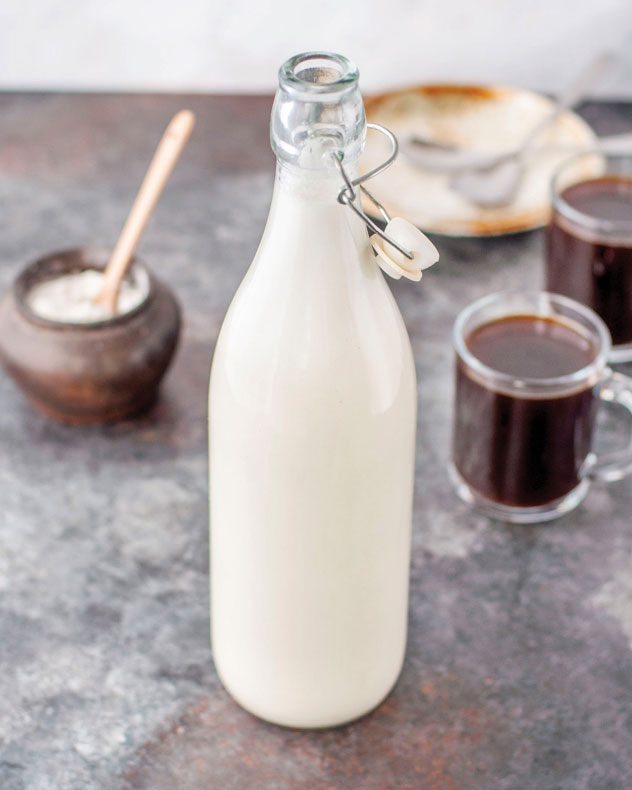
7. Transfer the finished milk to an airtight jar or bottle and store it in the refrigerator for up to 2 weeks. Shake well before using.
Nutritional Information
• Nutrition Information
• Per ¼ cup serving
• CALORIES: 91
• FAT: 8.4g
• PROTEIN: 2.3g
• TOTAL CARBS: 2.7g
• FIBER: 1.3g
• NET CARBS: 1.4g
Pro Tips
• Don’t toss the leftover almond pulp! Spread it on a baking sheet and dry it in a low-temperature oven to make almond meal for low-carb baking.
• Customize your milk by adding a pinch of sea salt to enhance the flavor, a dash of cinnamon, or a tablespoon of unsweetened cocoa powder for a chocolate version.
• Give the milk a good shake before each use, as natural separation is normal and expected with homemade nut milks.
FAQ
Q: Why do I need to soak the almonds first
A: Soaking the raw almonds overnight is a crucial step that softens and plumps them up. This allows them to blend more easily, resulting in a significantly smoother and creamier milk.
Q: How long does homemade almond-coconut milk last
A: When stored properly in an airtight jar or bottle in the refrigerator, this homemade milk will stay fresh for up to 2 weeks. Natural separation is normal, so be sure to shake it well before each use.
Q: What can I do with the leftover almond pulp
A: Don’t discard the leftover almond pulp! You can spread it on a baking sheet and dry it in a low-temperature oven to create your own almond meal, which is perfect for low-carb baking recipes.
Q: Can I make this recipe without a high-powered blender
A: A high-powered blender is recommended for the creamiest texture. If you use a standard blender, you may need to blend the mixture for a longer period, possibly 3-4 minutes, and pause to scrape down the sides to ensure the almonds are fully broken down.