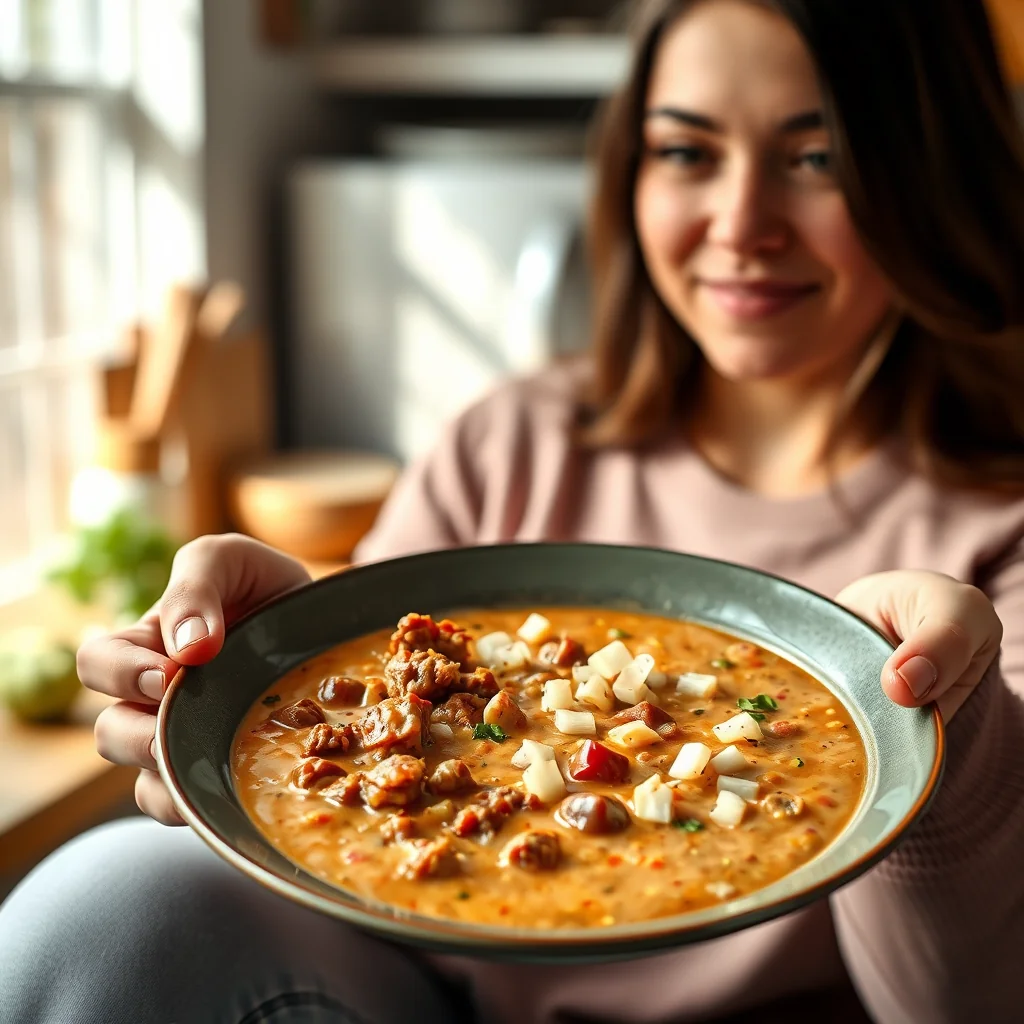
Instant Pot Seafood Stew with Trout and Shrimp is a fragrant fisherman's stew with chunks of trout, sweet shrimp, and cauliflower in a garlic-and-thyme fish stock. The shrimp go in first to flavor the base, and the trout steams gently on top so it stays in beautiful pieces. A squeeze of lemon at the table brings it all to life.
A Cozy Bowl of Comfort in Minutes
There’s nothing quite like a warm, flavorful stew to soothe the soul, but who has time for hours of simmering on a busy weeknight? Enter the Instant Pot! This recipe delivers a rich and satisfying seafood stew, brimming with tender trout and succulent shrimp, in just 35 minutes. It’s a healthy, low-carb meal that tastes like it’s been cooking all day. Get ready to fall in love with your new favorite weeknight wonder!
Ingredients
• Total Time: 35 minutes | Serves: 6
• 2 lbs / 900g (31.7 oz) trout fillets, cut into 2-inch chunks
• 1 lb / 450g shrimp, peeled and deveined
• 2 large onions, finely chopped
• ¼ cup / 60ml extra virgin olive oil
• 1 cup / 150g (5.3 oz) cauliflower, chopped into small florets
• ¼ cup / 15g (0.53 oz) fresh parsley, finely chopped
• 3 garlic cloves, crushed
• 4 cups / 950ml fish stock
• 1 tsp sea salt
• ½ tsp dried thyme
• Fresh lemon juice, for serving (optional)
Instructions
1. Directions
2. Set your Instant Pot to the ‘Sauté’ function and add three tablespoons of olive oil. Once hot, add the chopped onions and crushed garlic, sautéing for 3-4 minutes until soft and translucent.
3. Add the shrimp and continue to cook, stirring for another 2-3 minutes until they just turn pink. Press ‘Cancel’ to stop the sauté function.
4. Pour in the fish stock and gently add the trout fillets, cauliflower, parsley, sea salt, and dried thyme. Do not stir vigorously to keep the fish intact.
5. Secure the lid and set the steam release handle to the ‘Sealing’ position. Select the ‘Manual’ or ‘Pressure Cook’ button and set the timer for 10 minutes.
6. Once the timer finishes, allow the pressure to release naturally for 10 minutes before carefully moving the handle to ‘Venting’ to release any remaining steam.
7. Open the lid, give the stew a gentle stir, and serve immediately. A squeeze of fresh lemon juice just before serving brightens all the flavors.
Nutritional Information
• Per Serving
• Calories: 503
• Total Fat: 23.9g
• Net Carbs: 5.8g (0.2 oz)
• Protein: 62g
• Fiber: 1.6g
Pro Tips
• for Success
• Cut the trout into large, 2-inch chunks. This helps prevent the delicate fish from breaking apart completely during the pressure cooking cycle.
• For a spicy kick, add ¼ teaspoon of red pepper flakes along with the onions and garlic at the beginning of the recipe.
• This stew is fantastic on its own, but for a more substantial meal, serve it over cauliflower rice or with a side of crusty bread to soak up the savory broth.
FAQ
Q: Can I use a different type of fish instead of trout
A: Yes, you can substitute trout with other firm white fish like cod, halibut, or haddock. Ensure you cut them into large, 2-inch chunks to prevent them from breaking apart during cooking.
Q: Is this seafood stew keto-friendly
A: Absolutely. With only 5.8g (0.2 oz) of net carbs per serving, this Instant Pot seafood stew is an excellent meal for anyone following a keto or low-carb diet.
Q: What can I serve with this stew
A: This stew is delicious on its own, but for a more filling meal, you can serve it over cauliflower rice to keep it low-carb, or with a side of crusty bread to soak up the flavorful broth.
Q: How do I store leftover seafood stew
A: Store any leftovers in an airtight container in the refrigerator for up to 2 days. Reheat gently on the stovetop over low heat until just warmed through to prevent the seafood from becoming tough.
Pro Tips
- Cut the trout into large 2-inch chunks and avoid stirring vigorously after cooking — big pieces hold together and stay succulent.
- Cook the shrimp just until they turn pink before adding the stock; they finish under pressure and will go rubbery if browned too long.
- Fish stock is worth seeking out here — it gives the broth a depth that vegetable or chicken stock cannot match in a seafood stew.
- This stew is at its peak fresh; if you do have leftovers, keep them 1-2 days and reheat below a simmer.
Frequently Asked Questions
Can I use other fish instead of trout?
Yes, any firm fish like salmon or cod holds up to the pressure cook; keep the chunks large and the timing the same.
Is this seafood stew keto?
Yes. Each of the six servings has about 5.8 g net carbs with 62 g protein and 23.9 g fat.
Can I make it ahead?
Seafood stews are best fresh, as the fish softens as it sits. If needed, refrigerate 1-2 days and warm gently without boiling.
Does it freeze well?
Not really — both the trout and shrimp change texture after thawing. Enjoy this one fresh or refrigerated within a couple of days.
Recipe card below.
More Recipes You’ll Love
- Instant Pot Beef and Broccoli Stew
- Instant Pot Chili Meatballs
- Slow Cooker Old-Fashioned Beef Stew (Keto)

Instant Pot Seafood Stew with Trout and Shrimp
Ingredients
Method
- Directions
- Set your Instant Pot to the 'Sauté' function and add three tablespoons of olive oil.
- Once hot, add the chopped onions and crushed garlic, sautéing for 3-4 minutes until soft and translucent.
- Add the shrimp and continue to cook, stirring for another 2-3 minutes until they just turn pink. Press 'Cancel' to stop the sauté function.
- Pour in the fish stock and gently add the trout fillets, cauliflower, parsley, sea salt, and dried thyme.
- Do not stir vigorously to keep the fish intact.
- Secure the lid and set the steam release handle to the 'Sealing' position. Select the 'Manual' or 'Pressure Cook' button and set the timer for 10 minutes.
- Once the timer finishes, allow the pressure to release naturally for 10 minutes before carefully moving the handle to 'Venting' to release any remaining steam.
- Open the lid, give the stew a gentle stir, and serve immediately. A squeeze of fresh lemon juice just before serving brightens all the flavors.
- Cut the trout into large, 2-inch chunks. This helps prevent the delicate fish from breaking apart completely during the pressure cooking cycle.