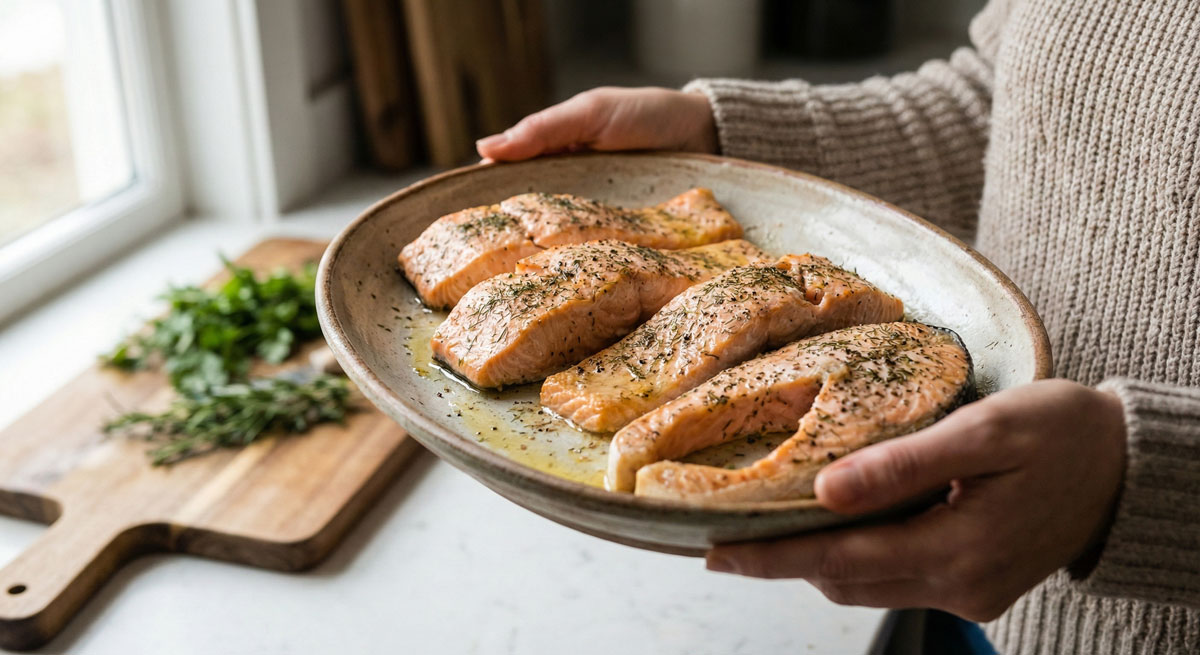
Craving a dinner that feels elegant but is secretly effortless? This Easy Baked Salmon with Dill is your new weeknight hero. It’s buttery, flaky, and comes together in 30 minutes with minimal cleanup. The moment you smell the rich butter and dill baking in the oven, you’ll be hooked. This is the simple, healthy meal you’ve been looking for!
Ingredients
• 16 oz 454g salmon fillets (approx. 4 steaks)
• 2 tbsp 30ml salted butter, melted
• 1 tsp dried dill weed
• 1 tsp onion powder
• 0.5 tsp ground black pepper
• 0.5 tsp salt (adjust to taste)
Instructions
1. Preheat your oven to 400ºF (205ºC) and ensure the oven rack is positioned in the center.
2. Lightly grease a baking dish or line it with parchment paper for easy cleanup.
3. Arrange the 16 oz (454g) of salmon fillets inside the prepared baking dish, ensuring they are spaced out and not overcrowding the pan.
4. Brush the 2 tbsp (30ml) of melted butter evenly over the tops of the salmon fillets to act as a binder for the spices.
5. In a small bowl, mix the 1 tsp dried dill, 1 tsp onion powder, 0.5 tsp pepper, and salt, then sprinkle this mixture evenly over the buttered fillets.
6. Bake in the preheated oven for 20 minutes, or until the fish is opaque and flakes easily with a fork (aim for an internal temperature of 145°F / 63°C).
7. Remove the Easy Salmon Steaks with Dill from the oven and transfer them to a serving platter immediately to serve warm.
Nutritional Information
• Here is the estimated nutrition per serving based on the listed (1/4 of the recipe).
• Calories: 295 kcal
• Carbohydrates: 1 g
• Protein: 23 g
• Fat: 21 g
• Saturated Fat: 6 g
• Cholesterol: 70 mg
• Sodium: 350 mg
Pro Tips
• 1. Pat It Dry: Before adding your butter or seasoning, take a paper towel and gently pat the salmon fillets dry. Removing excess moisture ensures the butter sticks better and prevents the fish from steaming, giving you a better texture.
• 2. Bring to Room Temperature: Let your salmon sit on the counter for about 10–15 minutes before baking. Cooking cold fish straight from the fridge often leads to uneven cooking, with the outside drying out before the center is done.
• 3. Watch for the “White Stuff” (Albumin): If you see a lot of white protein bubbling up on the sides of your salmon, it is a sign it might be slightly overcooking. Pull it out of the oven as soon as it is opaque and flakes easily.
• 4. Fresh vs. Dried Dill: While this recipe calls for dried dill for convenience (it is more potent, so you use less), fresh dill is fantastic too! If swapping, use 1 tbsp of fresh dill for every 1 tsp of dried dill listed.
FAQ
Q: How do I know when the baked salmon is done
A: The salmon is perfectly cooked when it becomes opaque and flakes easily with a fork. For a precise measurement, use a meat thermometer to check for an internal temperature of 145°F (63°C). If you see a lot of white protein (albumin) bubbling on the surface, it’s a sign it’s ready or slightly overcooked.
Q: Can I use fresh dill instead of dried for this recipe
A: Yes, you can definitely use fresh dill. Since dried herbs are more concentrated, you’ll need to use more fresh dill to get the same flavor. A good rule of thumb is to use 1 tablespoon of fresh dill for every 1 teaspoon of dried dill called for in the recipe.
Q: What is the best way to prepare salmon before baking
A: For the best texture, pat the salmon fillets completely dry with a paper towel. This helps the butter and seasonings adhere properly and prevents the fish from steaming. It’s also recommended to let the salmon sit at room temperature for 10-15 minutes before baking to ensure it cooks more evenly.
Q: How can I prevent my salmon from sticking to the pan
A: To prevent sticking and make cleanup effortless, the recipe suggests either lightly greasing your baking dish or lining it with parchment paper before you arrange the salmon fillets.