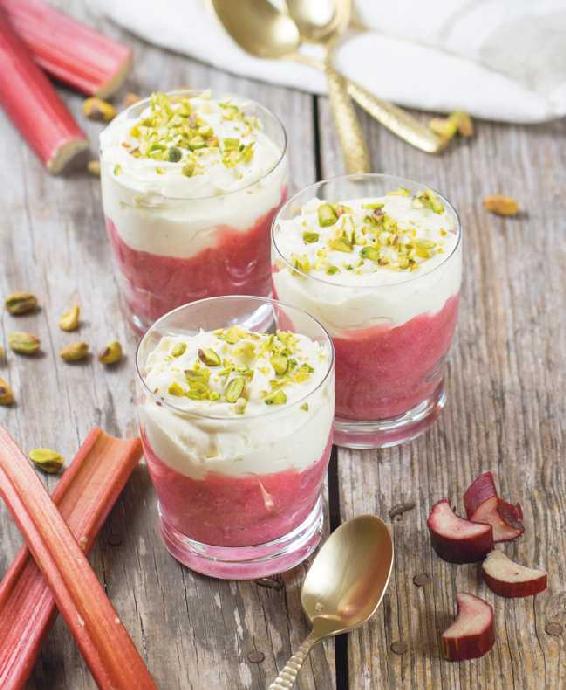
There are some flavor pairings that are simply timeless, and rhubarb and custard is one of them. This dessert is a nostalgic trip to the British countryside, but with a modern, low-carb twist. We’re taking the sharp, tangy notes of spring rhubarb, stewed into a jewel-toned compote, and layering it with a ridiculously creamy, vanilla-flecked custard. It’s an elegant, surprisingly simple dessert that proves you don’t need sugar to create something truly spectacular. Get ready to fall in love with this classic all over again!
Ingredients
• Custard
• 2 teaspoons powdered unflavored gelatin
• 2 cups / 480 ml heavy cream, divided
• ½ cup / 95 g granulated low-carb sweetener
• Seeds of 1 vanilla bean
• ½ stick / ¼ cup / 55 g unsalted butter
• Generous pinch of fine sea salt
• 4 large egg yolks
• Rhubarb Layer & Garnish
• 1 pound / 450 g rhubarb stalks, washed and chopped
• ½ cup / 95 g granulated low-carb sweetener
• ½ cup / 120 ml water
• ½ stick / ¼ cup / 55 g unsalted butter
• Chopped raw pistachios, for garnish
Instructions
1. Make the Custard
2. Bloom the gelatin: In a small bowl, sprinkle the gelatin over ½ cup / 120 ml of the cream. Whisk with a fork and let it sit for 5 minutes to bloom.
3. Heat the cream: Place the remaining 1½ cups / 360 ml of cream, sweetener, vanilla bean seeds, butter, and salt in a saucepan over medium heat. Bring the mixture to a near boil, whisking often to combine.
4. Temper the eggs: While the cream heats, lightly beat the egg yolks in a large mixing bowl. Whisking rapidly, very slowly pour the hot cream mixture into the egg yolks. Whisk in the bloomed gelatin mixture.
5. Thicken the custard: Return the entire mixture to the saucepan. Cook over low heat, stirring constantly with a spatula, until it thickens enough to coat the back of the spoon. Do not let it boil.
6. Chill the custard: Pour the custard into a heatproof bowl. Press a piece of plastic wrap directly onto the surface to prevent a skin from forming. Let it cool slightly, then refrigerate for at least 3 hours, until fully set.
7. Make the Rhubarb Compote
8. Cook the rhubarb: Combine the chopped rhubarb, sweetener, water, and butter in a separate saucepan. Bring to a boil over medium heat, then reduce to a simmer. Cook for 5-10 minutes, until the rhubarb is tender but still holds some shape.
9. Chill the compote: Transfer the rhubarb mixture to a bowl, cover, and refrigerate for at least 3 hours until completely cool.
10. Assemble and Serve
11. Prepare the custard: Remove the chilled custard from the refrigerator. Whisk it vigorously by hand or with an electric mixer until it becomes smooth, light, and glossy.
12. Layer the dessert: Divide the chilled rhubarb compote among 6 ramekins or serving glasses. Spoon or pipe the whipped custard over the top.
13. Garnish and store: Sprinkle with chopped pistachios before serving. Store any leftovers, covered, in the refrigerator for up to 4 days.
Nutritional Information
• Servings: 6
• Prep Time: 20 minutes
• Cook Time: 20 minutes
• Chilling Time: 3 hours
• Calories: 350 kcal
• Net Carbs: 6g
• Protein: 5g
• Fat: 32g
Pro Tips
• Don’t rush the tempering! Pouring the hot cream into the eggs too quickly will scramble them. A slow, steady stream while whisking constantly is the key to a silky-smooth custard.
• For a vibrant pink compote, choose the reddest rhubarb stalks you can find. You can also add a tablespoon of sugar-free raspberry gelatin or a few crushed raspberries for extra color and flavor.
• The final whisk of the chilled custard is a crucial step. It transforms the mixture from a firm, panna cotta-like texture into a light, creamy, and pipeable dessert cream.
• Adjust sweetness to your liking. Rhubarb’s tartness can vary, so taste your compote before chilling and add a bit more sweetener if needed.
FAQ
Q: What kind of low-carb sweetener is best for this recipe
A: A granulated low-carb sweetener like an erythritol or monk fruit blend works well as it measures similarly to sugar. You can adjust the amount based on your personal taste and the tartness of your rhubarb.
Q: Why did my custard turn out lumpy or scrambled
A: Lumpy custard is usually caused by adding the hot cream to the egg yolks too quickly, which cooks the eggs. To prevent this, pour the hot cream in a very slow, steady stream while whisking the yolks constantly. This process, called tempering, ensures a silky-smooth result.
Q: Is the gelatin necessary for the custard
A: Yes, the gelatin is crucial for this recipe. It gives the custard a firm, panna cotta-like texture when chilled, which is then whipped into a light and creamy consistency. Without it, the custard would be much thinner and more like a traditional pouring sauce.
Q: Can I make this dessert dairy-free
A: While this specific recipe relies heavily on dairy, you could experiment with full-fat coconut cream instead of heavy cream and a dairy-free butter alternative. The texture and flavor will be different but can still be delicious.