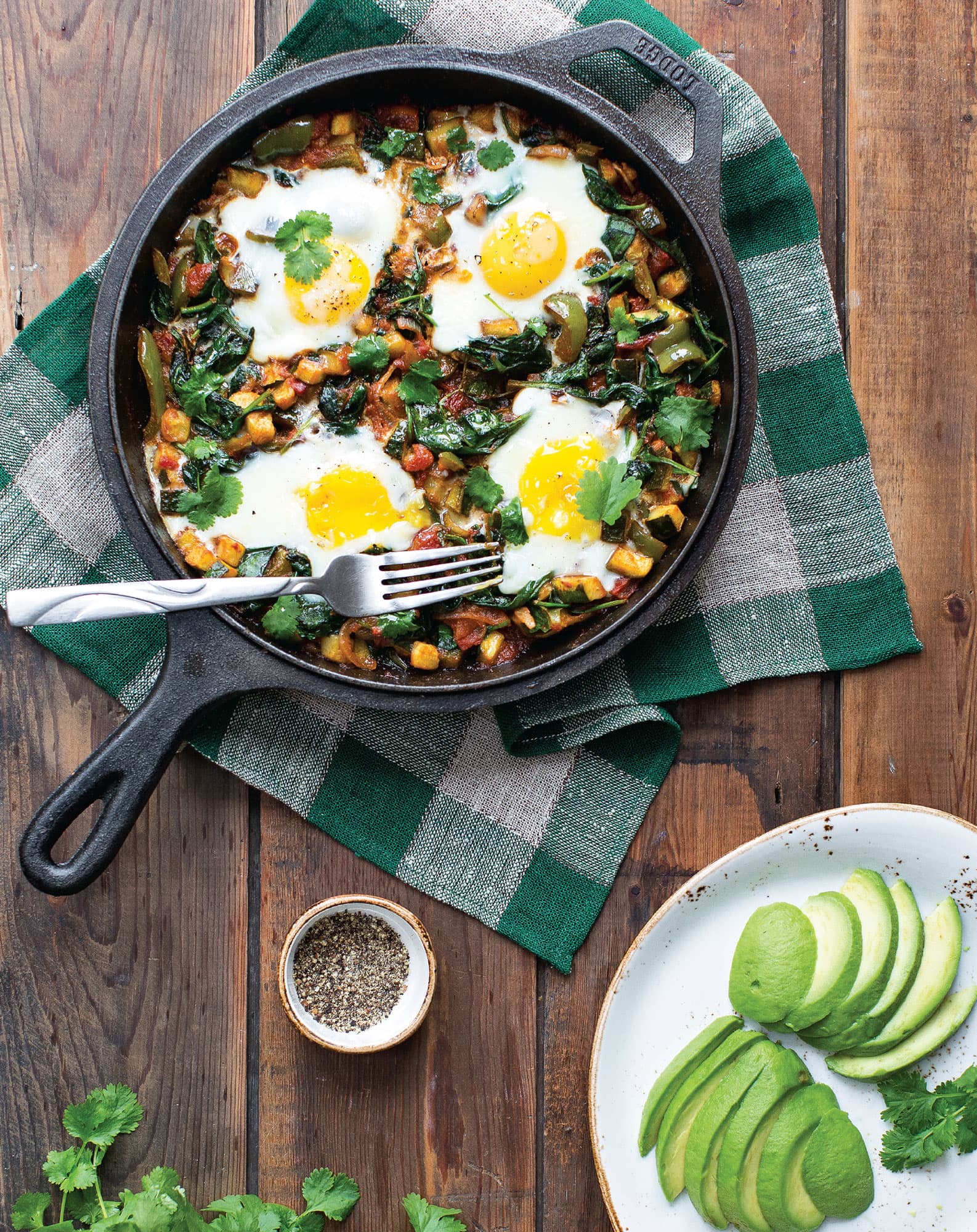
Craving that soul-warming, brilliantly colored shakshuka but sticking to a keto lifestyle? You’ve come to the right place! Traditional shakshuka, with its luscious poached eggs swimming in a spiced tomato and pepper sauce, is a classic for a reason. While it’s already low-ish in carbs, we’ve given it a keto-friendly makeover by swapping in zucchini and a generous handful of spinach. The result is a deeply flavorful, nutrient-packed, one-skillet wonder that’s perfect for a lazy weekend brunch, a quick weeknight dinner, or any time you need a delicious, satisfying meal without the carb load.
Ingredients
• 2 tablespoons / 30 g / 1.1 oz ghee or other healthy cooking fat
• 1/2 small / 35 g / 1.2 oz yellow onion, sliced
• 1 clove garlic, minced
• 1 medium / 120 g / 4.2 oz green bell pepper, sliced
• 1 small / 150 g / 5.3 oz zucchini, cut into 1/2-inch / 1-cm cubes
• 1/2 cup / 120 g / 4.2 oz canned chopped tomatoes
• 1/2 teaspoon ground cumin
• 1/2 teaspoon paprika
• 1/4 teaspoon ground coriander
• 1/8 teaspoon cayenne pepper
• Salt and freshly ground black pepper, to taste
• 3 cups / 90 g / 3.2 oz fresh spinach
• 4 large eggs
• 1 tablespoon / 4 g / 0.2 oz freshly chopped cilantro or parsley
• Optional Garnishes
• 1/3 cup / 50 g / 1.8 oz crumbled feta cheese
• 1 medium / 150 g / 5.3 oz avocado, sliced
Instructions
1. In a large skillet, heat the ghee over medium-high heat. Add the sliced onion and cook for 5 to 8 minutes, stirring occasionally, until softened and lightly browned.
2. Add the minced garlic, sliced green pepper, and cubed zucchini. Cook for 2 minutes, stirring to combine.
3. Stir in the chopped tomatoes, cumin, paprika, coriander, cayenne pepper, salt, and black pepper. Bring the mixture to a simmer and cook for about 5 minutes, or until the vegetables are tender.
4. Add the fresh spinach to the skillet and stir until it has just wilted, about 1 minute.
5. Using a spoon or spatula, create 4 small wells in the vegetable mixture. Carefully crack one egg into each well.
6. Reduce the heat to low, and cook until the egg whites are set and opaque but the yolks are still runny, about 5-7 minutes. For firmer yolks, cover the skillet with a lid.
7. Remove from the heat. Garnish with fresh cilantro or parsley. If desired, top with crumbled feta and sliced avocado. Serve immediately.
Nutritional Information
• Per Serving: 338 calories, 25.4 g fat, 16.3 g protein, 12.6 g total carbs, 4.1 g fiber, 8.5 g net carbs. Macronutrient Ratio: 70% Fat, 20% Protein, 10% Carbs.
Pro Tips
• For firmer yolks, cover the skillet with a lid while the eggs cook. This traps steam and helps cook the tops of the eggs more quickly.
• To meal prep, make the vegetable base ahead of time and store it in an airtight container in the fridge for up to 3 days. Reheat on the stove and add fresh eggs when you’re ready to eat.
• Adjust the heat by increasing or decreasing the amount of cayenne pepper. For a smokier flavor, try using smoked paprika instead of sweet paprika.
• Don’t overcrowd the pan. Use a 10 or 12-inch skillet to ensure there is enough room for the vegetables to cook evenly and for the eggs to have their own space.
FAQ
Q: Is shakshuka keto friendly
A: While traditional shakshuka can be high in carbs, this recipe is specifically designed to be keto-friendly. By using zucchini and spinach, each serving contains only 8.5 grams of net carbs, making it a perfect fit for a ketogenic lifestyle.
Q: What can I serve with keto shakshuka
A: This dish is a satisfying meal on its own, but it’s delicious when served with the optional garnishes of crumbled feta cheese and sliced avocado for extra flavor and healthy fats. For dipping, consider a side of your favorite keto-friendly bread or cloud bread.
Q: Can I meal prep this recipe
A: Absolutely. To meal prep, make the vegetable base ahead of time and store it in an airtight container in the fridge for up to 3 days. When you’re ready to eat, simply reheat the sauce on the stove and add fresh eggs.
Q: How do I get firmer egg yolks
A: If you prefer your yolks more cooked, cover the skillet with a lid while the eggs are poaching. The trapped steam helps cook the tops of the eggs more quickly, resulting in firmer yolks.